
Gateshead Flyover demolition to drag into 2026 as council leader admits ‘frustration’

Gateshead’s council leader has admitted to “frustration” over the time it will take to tear down the town’s doomed flyover, after demolition plans stretching well into 2026 were confirmed.
The A167 Gateshead Highway flyover has been closed since December 2024 due to concerns about the safety of the crumbling concrete structure.
After months of waiting, council bosses announced on Tuesday that a multi-million pound demolition programme will begin next week, October 20.
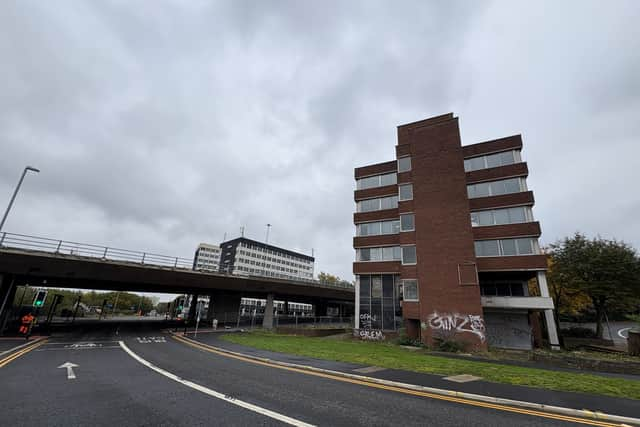

But the derelict Computer House building next to the flyover will have to be torn down first, meaning that the removal of the flyover itself will not start until early next year.
It is hoped that contractors BAM Nuttall and Thompsons of Prudhoe will have the flyover demolition largely complete by next May, though local authority officials are already cautioning that further delays are possible.
Labour council leader Martin Gannon told the Local Democracy Reporting Service (LDRS) on Tuesday that he had put “enormous pressure” on civic centre officers over the last 10 months and that “nobody has been more frustrated than me” about the deserted highway’s continuing presence looming over the town.
Coun Gannon, who had pledged in March that the flyover would be “gone within a year”, said: “There are plenty of examples around the country and internationally where a demolition of this scale would take four or five years to plan and put through. To get to this stage in 10 months where we are about to start the work and by May next year this will effectively be gone has been absolutely fantastic.”
He added: “It is an immensely complex structure. To be able to get to this stage where it has been planned, contractors put in place, safety measures put in place, preparations for the diversions, issues around liability and insurance, contractors procured through legal processes, is enormous. Ultimately, despite my frustration and the frustration on behalf of the people of Gateshead… yes we would have liked it down quicker, but I think at the end of the day I give credit to the people who have been doing the work, the engineers and the professional officers of the council, to get us to this stage as quickly as possible.”
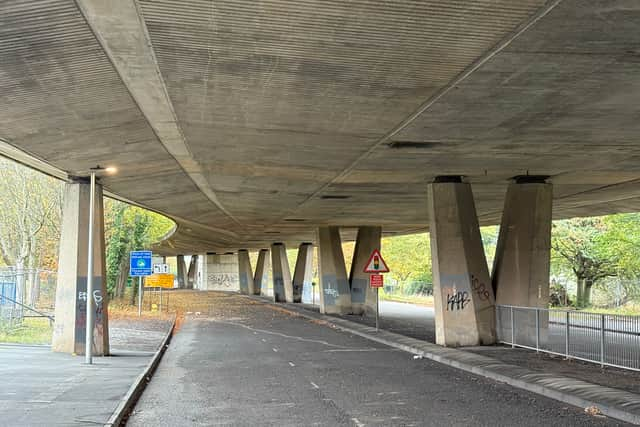
After the demolition of Computer House, nibbling machines will be used to gradually remove the flyover in stages – with an explosive demolition deemed unsafe for a structure which runs above underground Tyne and Wear Metro tunnels.
Contractors will start in the central section of the elevated road around the Sunderland Road bus lane, before later moving onto the areas around the Five Bridges and Park Lane roundabouts, then finally the section above the Metro line.
There have been active safety concerns about the flyover in recent weeks, with a vehicle struck by falling debris and a skate park beneath the highway closed due to loose concrete above it.
Anneliese Hutchinson, the council’s director of economy, innovation and growth, said that the council would regularly inspect the flyover during the demolition project, remove loose material, and install cameras to monitor the Metro tunnels.
Asked about potential further delays to the flyover’s removal, she told the LDRS: “It is very rare that a big project would not have some issues that mean it overruns. Like any big project, we will learn as we go along and we will do everything we can to minimise the disruption.”
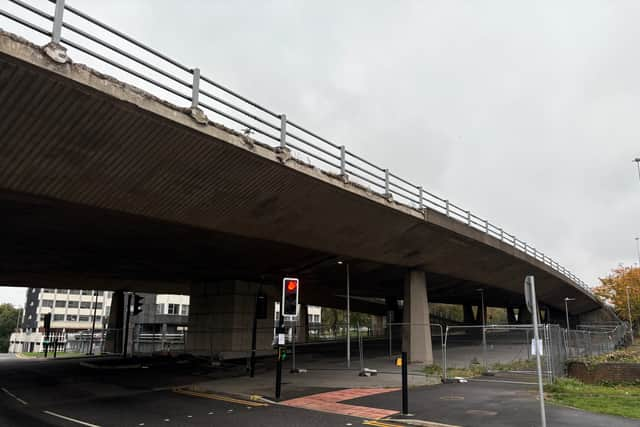
Meanwhile, Gateshead Council has also admitted that it should have “more proactive planning” in place to deal with major infrastructure problems.
A report being presented to councillors next week calls for better communication and recovery plans than had been in place for the closure of the flyover, which was an urgent decision taken without notice on a Friday afternoon in the run-up to Christmas 2024 despite there having been concerns about the condition of the flyover for many years.
Public health director Alice Wiseman’s report states: “The response to the flyover closure was very reactive and it has been identified that more proactive planning should be in place for infrastructure within Gateshead.
“This includes better recording of known risks to the Council Risk Register, site specific plans to pre-plan communications, identify stakeholders and any potential contractors required for response or recovery work. A template has been developed for this purpose by the Resilience and Emergency Planning Team in consultation with colleagues in the Economy, Innovation and Growth Group.”