
Leaking roof infested with rotting seagulls and falling maggots forced South Shields’ court to close

Dead seagulls and maggots highlight the grim reality of South Shields’ court as a new national report calls for urgent investment.
A leaking court roof infested with rotting seagulls and falling maggots forced South Shields’ courthouse to close early on two separate occasions last year, according to a damning new report on the state of courts across England and Wales.
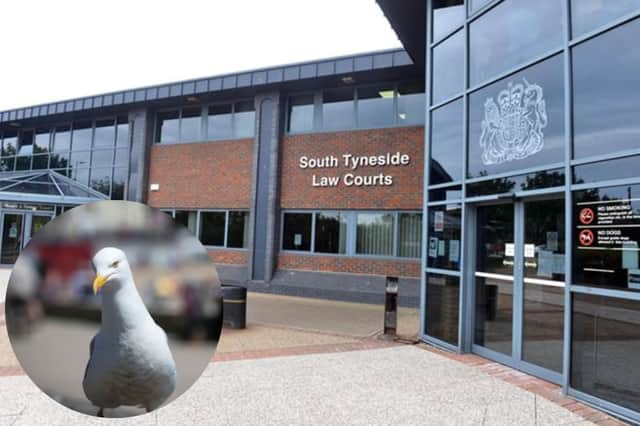

The report, released today by the Law Society of England and Wales, paints a stark picture of a justice system under extreme strain — not just from overwhelming case backlogs, but from collapsing infrastructure unfit for a functioning legal system. South Shields' situation was singled out as a vivid example of the physical decline seen across the court estate.
“The Court had to close early for two days within the last twelve months or so. This was because dead and rotting seagulls were within the roof insulation,” one contributor from South Tyneside reported. “The Court had to close because maggots were literally raining down onto the lobby.”
Other testimonies gathered in the survey describe similar failings across the country — asbestos in walls, mould-infested offices, broken toilets, inadequate heating and ventilation, and repeated flooding of court cells with sewage. The result, the report argues, is a justice system routinely grinding to a halt, where victims, witnesses, and defendants are left in limbo.
Almost two-thirds (63%) of solicitors surveyed said they had experienced delays in cases being heard over the past year due to the deteriorating state of court buildings. Many reported having cases adjourned, transferred online, or moved to different venues at short notice, disrupting proceedings and deepening the stress faced by clients.
Technological issues were also widely reported. One in five respondents (20%) said the current technology in courts was “not at all” fit for purpose — an issue that has remained largely unchanged since 2022. Problems cited include substandard remote hearing quality, unreliable software, and a lack of basic facilities such as functioning plug sockets.
Judicial staff also raised concerns about video evidence handling. “There is insufficient video technology in court rooms. The systems are not well supported, often the quality of sound or vision is poor and there is only limited capacity, erratically provided, to play electronic recordings,” said one judicial office holder.
Accessibility remains another critical issue. Solicitors with disabilities were nearly twice as likely to rate the court buildings as "not at all fit for purpose" compared to those without a disability (45% vs. 25%). Physical barriers such as missing ramps and broken lifts continue to hinder full participation in the justice process.
Law Society president Richard Atkinson said the findings show how underinvestment in the courts is contributing to delays and weakening public trust in justice.
“The poor state of court buildings across England and Wales is both a contributor to the huge backlog of court cases and an illustration of the woeful lack of investment in our justice system,” Atkinson said.
“The backlog in our Crown Courts stands at more than 76,957 cases, while two-thirds of care cases in family courts take longer than the 26-week time limit. There are currently 35,475 open family court cases. Behind each of these statistics are tens of thousands of adults and children who could be freed from limbo and move forward with their lives if they could have their day in court.”
The Law Society report also highlights examples of good practice where targeted investment has led to improved conditions, arguing that progress is achievable if the government acts. While recent commitments to court infrastructure have been welcomed, the report concludes that greater and sustained funding is urgently needed to ensure the justice system is accessible, efficient, and safe for all.