
Crunch meeting rules on scheme to turn South Tyneside shop into nine-bed HMO after hundreds of objections
Plans to convert a former South Tyneside shop and flat into a nine-bedroom house in multiple occupation (HMO) have been blocked by borough councillors, following hundreds of public objections.
South Tyneside Council’s Planning Committee, at a meeting this week, voted unanimously to refuse an application for an address at 3-5 Birch Street in the Monkton ward in Jarrow.
Plans submitted last year (2025) sought permission for the change of use of a “vacant ground floor shop and first floor flat” to a “nine-bedroom HMO”, along with “single-storey rear extensions” and alterations to the building’s elevations.
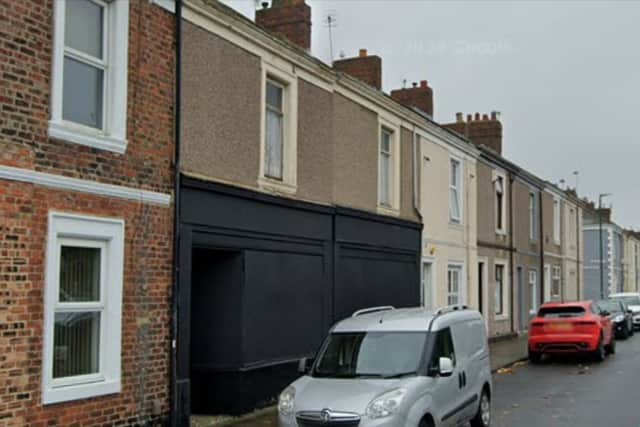

Existing floor plans for the site showed a two-bedroom flat on the building’s first floor with a lounge, kitchen, bathroom and utility and it was noted that the ground floor was previously used as shop space.
A planning application for the proposed HMO use said the shop had been vacant for years and also described the first floor space as a “vacant flat.”
Proposed HMO plans for the site showed five bedrooms on the ground floor, along with an open plan communal kitchen and dining area, rear yard and cycle storage, as well as four bedrooms proposed on the first floor.
Floor plans for the HMO indicated each room would have en-suite bathroom facilities, with planning documents stating the development would “create high-quality spaces” aimed at “young professionals”.
A planning statement submitted to council officials noted the applicant “wishes to bring the property back to life through sensitive repairs and new extensions that fulfil the potential of the property that can then be re-purposed and provide a new character to the area”.
It was also noted that “special attention has been made to ensure that each bedroom passes the council’s HMO guideline while providing spaces which aim at young professionals” and that the accommodation would “target long-term tenants."
South Tyneside Council's planning department, in a report published ahead of a decision-making Planning Committee this week, had recommended the HMO plan for approval.
It was noted that the "greatest weight in deciding this application needs to be given to the NPPF [national planning policy framework] as opposed to local planning policy, given that the application includes housing development and the council’s housing land supply/delivery deficiencies".
Council planners, in the committee report, said the development would "bring a currently vacant building back into use" and would "provide a form of affordable accommodation that meets an identified housing need", with no "significant harm or adverse impacts [...] identified in respect of visual and residential amenity, biodiversity, highway safety, or in respect of crime/antisocial behaviour/fear of crime and flood risk/drainage."
During a council public consultation the HMO plan sparked significant opposition, with around 58 formal objections and an online petition with more than 525 signatures.
Public concerns, summarised in a council report, included "impact on local character and community", crime and antisocial behaviour, parking pressures, waste management and concerns "vulnerable groups" would be impacted.
This included concerns about the impact of the HMO on "occupants of nearby accommodation which includes an elderly persons' home directly opposite, a children’s care home next door and a second children’s care facility across the road", the council committee report states.
The HMO application was called into the decision-making Planning Committee by Fellgate and Hedworth ward councillor Geraldine Kilgour.
Arguments for and against the proposals were put forward at a crunch meeting at South Shields Town Hall on February 9, 2026.
A number of members of the public spoke in objection raising concerns about the development, followed by questions and comments from members of the Planning Committee.
Councillor Paul Dean raised concerns about the HMO impacting on neighbours, including elderly residents and young people, and said there was a "highways and access safety issue" due to increased parking pressures and the existing local road layout.
Councillor Joan Hamilton said she lived in the area and agreed there were parking issues and "serious problems" with access for emergency vehicles and bin wagons, as well as raising concerns about impacts on neighbours from occupants of the proposed nine-bed HMO.
Councillor Liz McHugh noted there were "already two HMOs in the area" and stated the Birch Street development would see "another nine occupants and another nine cars on the street at least" in an area that already had "horrific parking" issues.
Cllr McHugh also said she had a "major concern" about impacts on "vulnerable groups", including a new council children's home development in the area and other local care developments.
Councillor Paul Brenen said the proposal would "change the character of the local area" and noted the family area was the "wrong place for a HMO", while councillor David Kennedy raised concerns about the impact of the HMO given the "density" of existing housing, parking pressures and impacts on children's homes.
Councillor Kate Owens-Palmer, who voted against the development, added: "I agree with those who are opposing it, whether Northumbria Police have concerns, where the people who run the children's homes have concerns, where the residents are expressing concerns.
"I'm fully aware that we don't have any material consideration to give to the people who will live in those properties but historically, there has been a history in South Tyneside of antisocial behaviour and trouble around HMOs.
"I think it's a particularly sensitive area."
Councillor Shirley Ford also opposed the development raising concerns about impacts on the character of the area, the cumulative impact of HMOs, residential amenity of existing residents, impacts on children's homes and sheltered housing, parking and road safety impacts and more.
Council planning officers said that the occupiers of the HMO development were not of relevance to the determination of the application, as the planning system is focused on planning uses rather than the users of developments.
On parking matters, council planning officers said that the planning class of the Birch Street property's ground floor was a commercial use which could reopen at any time arguably generating "more comings and goings than a nine-bedroom HMO", and the Planning Committee later agreed not to list parking as a refusal reason which would be considered at any future appeal.
It was also noted that the council's licensing team had not raised any objections to the proposed amenity space for occupants of the proposed HMO, including bedroom sizes.
After being put to the vote, the plans were rejected by a unanimous vote, with councillors deciding to refuse the plans against the recommendation of council officers to approve.
The main reasons for refusal, which were agreed by the Planning Committee following a debate, included the proposed HMO's impact on the character of the area, impacts on residential amenity and the cumulative impact of the new nine-bedroom HMO, given existing HMO developments in the area.
The applicant has the right to challenge the council's refusal decision by lodging an appeal with the Secretary of State.
For more information on the plan, visit the council’s planning portal website and search reference: 250681