
South Tyneside draws up new ways of looking after trees after 'significant damage'
Senior councillors in South Tyneside have approved a policy aimed at improving the management of trees and woodland across the borough.
South Tyneside Council’s Labour cabinet, at a meeting this month (March, 2026), approved an updated Tree and Woodland Policy.
The policy sets out how the local authority cares for trees on land that it owns or manages, why they matter and how the council ensures public safety.
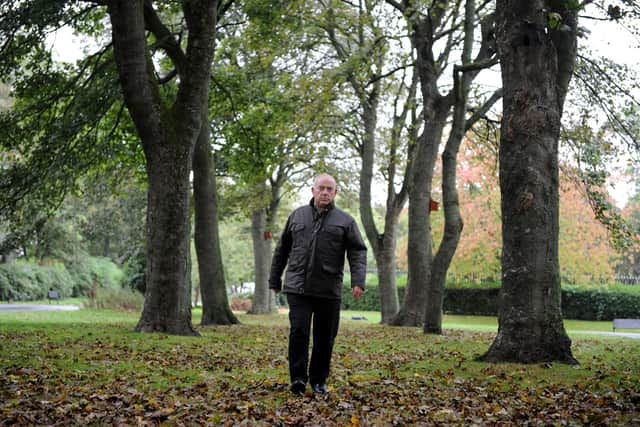

The council previously stated the policy covers approximately 300 hectares of council-managed tree canopy, forming part of the 500 hectares of total tree canopy across South Tyneside, and also explains the principles behind its decision-making.
A report presented to South Tyneside Council’s cabinet on March 11, 2026, said the council “recognises the wide-ranging benefits that trees provide”, from “enhancing biodiversity and improving visual amenity”, to “reducing noise and air pollution, offering shelter from wind and providing cooling during warmer months”, as well as supporting “carbon capture”.
The cabinet report noted the policy was scheduled for review in 2021 but was “delayed due to the Covid-19 pandemic and the impact of Storm Arwen, South Tyneside’s most severe storm since 1954, which caused widespread tree failures across the borough”.
In response to the “significant damage to the council’s tree stock” it was noted that a decision was taken in 2022 to “undertake a comprehensive review of tree risk management and operational procedures alongside the policy update”.
The process of reviewing the policy led to a “shift from a predominantly reactive inspection approach to a proactive inspection regime for all council-owned trees, ensuring the council meets its legal duty of care,” cabinet documents state.
It was also noted that the new policy “reflects best practice in urban tree management and aligns with national guidance” and “establishes robust procedures for tree risk management, planting and maintenance, and promotes transparency in decision‑making”.
One key aspect of the policy includes managing tree risk through a new set of operating procedures which “require individual trees or groups of trees to be inspected and subject to a formal risk assessment”, with the assessment “quantifying risk, determining appropriate re‑inspection intervals and identifying when remedial works are required.”
A report presented to senior councillors said that in-person consultation events were attended by individuals representing eight groups and that online consultation responses totalled “100 completed questionnaires.”
Speaking at the latest meeting of South Tyneside Council’s cabinet this month, Cllr Gibson said the policy sets out a “clear concise way of managing trees” on council land while supporting the council’s “wider ambitions” around “stronger communities” and “cleaner, greener places, such as Temple Park”.
The senior councillor said council-owned trees would be “inspected and assessed based on risk” to ensure resources are “focused effectively where this matters most to improve safety for our residents and to make sure we’re meeting the legal responsibilities”.
Cllr Gibson also said the policy would ensure that the “right tree is planted in the right place”, along with a “proactive approach” around issues such as overgrown trees impacting street lighting, and wider benefits in terms of “enhancing biodiversity”.
“The policy provides the council with a clear framework for decision-making and sets out the tools to enhance the natural environment across our own managed land, supporting fairness, inclusiveness, consistency and transparency,” Cllr Gibson added.
The cabinet report also referenced an equality impact assessment which said that the policy was “likely to impact those who live in social housing in the borough more than those who live in private housing as the council has a responsibility to manage the trees for the former and not the latter”.
However, the report noted that “the content of the policy should not adverselyimpact this group” and “should give the council the tools to improve the natural environment across council land and managed areas.”
Councillor Jim Foreman, cabinet member for governance, finance and corporate services, welcomed the policy and the “opportunities to enhance the area of Temple Park and other areas within the borough that’s needed”.
“I’m particularly interested about the safety aspect because one of the things that we all think about is making sure that our residents are always on the safe side, so it’s great to hear both enhancement and safety are two of the keystones of this policy,” Cllr Foreman added.
“Certainly having walked through Temple Park many many times, I’m sure whatever enhancements that are done will only improve the opportunity to enjoy the park.”
The report to cabinet noted that “adopting the Tree and Woodland Policy significantly reduces the council’s exposure to legal, financial and reputational risk by providing a clear, structured and defensible approach to the management of trees under its control”.
The report added that “the initial programme of tree safety inspections is currently estimated to take up to four years to complete, based on the forecast number of council-owned trees and existing resources”.
It was noted that “during this period, risks will be actively managedthrough the application of the risk-based approach, with higher-risk treesprioritised for inspection and intervention”.
The council is also expected to explore “options to reduce the overall timescale […] to further minimise potential risk exposure.”