
Huge blueprint for South Tyneside's future triggers HMO warning as 'developers laugh all the way to the bank'
Concerns have been raised around houses in multiple occupation (HMOs) in South Tyneside as part of discussions around a blueprint for future development in the borough.
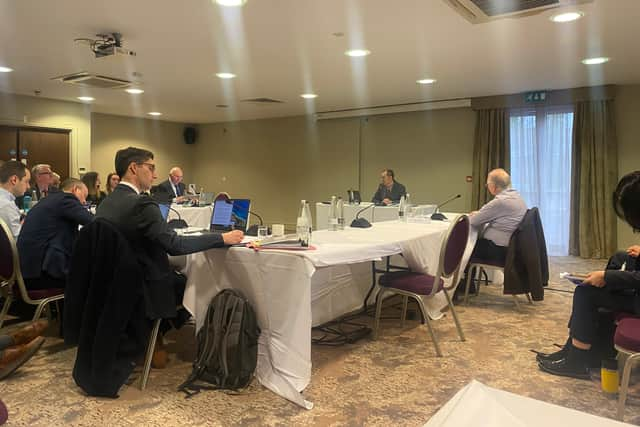
The worries were voiced during the second stage of public hearings held as part of an independent examination of South Tyneside Council’s proposed local plan.
The document aims to provide a framework for where new homes, businesses, shops and leisure amenities will be built in the borough up until 2040.

It also aims to ensure the right infrastructure, such as roads, health facilities and schools, is in place to support growth.
Despite the local plan twice being rejected by councillors, the Minister of State for Housing and Planning issued an intervention notice directing the council to submit the plan for independent examination in public.
The sessions are to help the inspector determine if the plan is ‘sound’.
The second stage of hearings began on Tuesday, January 13, and concluded on Wednesday, January 21, with one of the sessions discussing houses in multiple occupation (HMOs) in the borough and the role they play.
Deborah Lamb, council operations manager for the spatial planning team, outlined how there is “a role for HMOs in meeting certain housing needs” in the borough and a specific policy on HMOs is required as part of the local plan.
She added: “The inclusion of the policy is very much to try and strike a balance between allowing appropriate HMOs in suitable locations but also trying to seek to manage the concentrations of these uses and the potential impacts on the community and amenity for existing residents.”
Councillor Geraldine Kilgour, Fellgate and Hedworth ward representative, voiced her worries that an increase in applications have been coming forward for HMOs and areas throughout the borough are being impacted – not just South Shields town centre.
She said: “What we’re finding now is that larger, older properties are at risk of such applications and there have been many within the last few weeks in the Jarrow and Hebburn areas.
“We’ve got some in the narrow terraces of Jarrow with the old Victorian buildings, we’ve got them at either ends of one road, so I think we need to be really careful.”
The proposed local plan notes where planning permission is required, proposals for HMOs will be permitted where certain criteria are met.
These include the building being suitable for the number of proposed units and the accommodation providing a good standard of living space and amenity for the occupiers, along with ensuring adequate parking provision and ensuring no detrimental impact on the area through excessive noise and disturbance.
The policy states proposals would only be allowed where they would “not result in an over-concentration of HMOs within any one area of the borough, or lead to HMOs becoming the dominant dwelling type” of a local area.
It also must “not result in any residential property being directly ‘sandwiched’ between two HMO’s on both sides”.
Meanwhile permission will only be granted in the Lawe Top area where the “number of HMO dwellings does not exceed 10% of the total number of properties, within 100 metres from the application site”.
The area has been subject to an Article 4 Direction since 2014, which has recently been implemented across the borough.
This removes permitted development rights for small HMOs (which accommodate between three and six unrelated people) and means planning permission is now needed for all HMOs across the borough.
Councillor Sue Stonehouse, Beacon and Bents ward representative, raised concerns around the high number of HMOs in her ward, including in Beach Road in the Lawe Top area, and the impact they have.
She said: “For nearly six years I’ve seen the issues in the ward deteriorate, I’ve seen brawls between residents from two separate HMOs, some of these vulnerable residents have complex mental needs and addictions.
“They do not have the support of staff or management, which is one of my issues.
“It’s caused many residents to sell their homes at a loss just to get out of the area.”
She added: “We have HMOs that actually have people who work that just can’t get on the property ladder, that’s not a problem, and we respect that and we respect the people for looking after them.
“My issue is a lot of the residents have severe mental health [needs] or addictions, they need looking after, they’re not looked after, but the people who have some of these HMOs are laughing all the way to the bank.”
She also argued policies should be based on the number of residents in HMOs rather than the properties themselves – however the hearing was told there could be “practical difficulties or issues” with such an approach.
Council legal representatives noted the policy in regards to HMOs has been drafted to provide “a sound basis for planning control” and to help regulate the issues referred to.
For more information on the hearings and links to live streams residents can visit https://www.southtyneside.gov.uk/article/24174/Local-Plan-examination.