
South Tyneside looks to enforce limits on takeaways because childhood obesity keeps getting worse
Council chiefs have highlighted the importance of limiting takeaways in South Tyneside to help tackle obesity as part of discussions around a blueprint for future development in the borough.
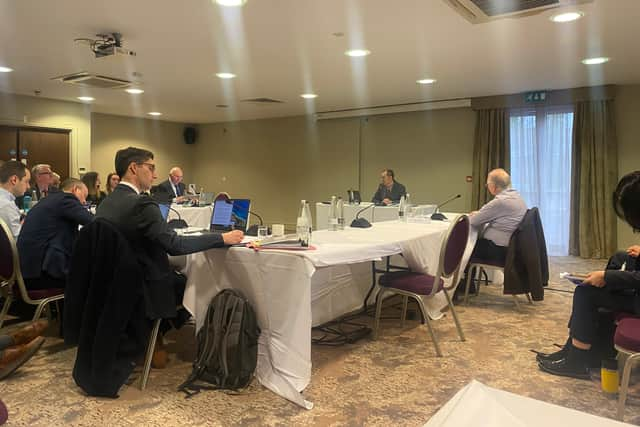
The issue was raised during the second stage of public hearings held as part of an independent examination of South Tyneside Council’s proposed local plan.
The document aims to provide a framework for where new homes, businesses, shops and leisure amenities will be built in the borough up until 2040.

It also aims to ensure the right infrastructure, such as roads, health facilities and schools, is in place to support growth.
Despite the local plan twice being rejected by councillors, the Minister of State for Housing and Planning issued an intervention notice directing the council to submit the plan for independent examination in public.
The sessions are to help the inspector determine if the plan is ‘sound’.
The second stage of hearings began on Tuesday, January 13, and concluded on Wednesday, January 21, with one of the sessions discussing a policy in the proposed document which focuses on hot food takeaways.
It states that to encourage positive health related behaviours and to minimise adverse amenity impacts associated with hot food takeaways, the council will not permit new takeaways in certain situations.
This includes where the premises is in a ward where levels of obesity in Year 6 pupils are over 10% and where the application site is outside of the town, district and local shopping centres and falls within a 400m radius of entry points to all secondary schools.
Other policies are also proposed to prevent an “over concentration and clustering” of hot food takeaways and to ensure developments do not result in negative impacts for neighbouring residents.
Robyn Bullock, council public health practitioner, speaking at the hearings, said a policy on hot food takeaways is needed as they have identified childhood obesity as a “key priority” within their health and wellbeing strategy.
She added: “Our Year 6 obesity prevalence is significantly higher than the England average and the regional average and we are actually based on the most recent 2024/25 release [of data] the highest in the region for Year 6 obesity prevalence.
“The hot food takeaway policy therefore seeks to address that by limiting the number of hot food takeaways, and the reason for that is we know that the environment does impact on obesity within the area.
“What I would say from a health perspective is that the hot food takeaway policy is one intervention as part of a wider suite of interventions which look to work simultaneously to address obesity in the local area.”
The hearing was told the latest data shows all wards in the borough have Year 6 obesity levels of over 10%, which would mean as things stand no further hot food takeaways would be supported.
Council officers noted the 10% figure for the policy follows on from a supplementary planning document adopted in the borough in 2017 which was based on evidence at that time and similar policies adopted by neighbouring areas.
They added since then 29 planning applications for hot food takeaways have come forward with 10 being refused, 11 withdrawn and eight granted planning permission.
Local authority health chiefs also warned about the impact of “watering down” the policy on takeaways.
Ms Bullock added: “When we look at our childhood obesity figures, they have been increasing year on year and I think our concerns if the policy was watered down would be that we would continue to see an increase in those obesity figures.
“We are very clear that the policy itself isn’t going to solve childhood obesity, but actually we need to look at it as part of our whole systems approach to obesity, in which that would form part of our approach within public health.”
She added other steps to tackle obesity include work around advertising, encouraging individuals to partake in physical activity and make better food choices, the promotion of sustainable food and cooking classes.
Council public health officers stressed that to reduce obesity support is needed from a variety of partners and other organisations, which they aim to facilitate.
For more information on the hearings and links to recorded streams of the sessions residents can visit https://www.southtyneside.gov.uk/article/24174/Local-Plan-examination.