
Verdict in on new six-bed HMO for South Shields after neighbours hit out at plans
Plans for a six-bedroom HMO in South Shields have been approved by council planning officers, despite public opposition.
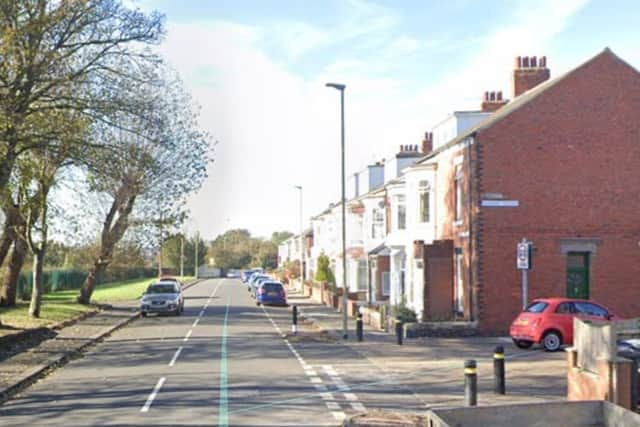
South Tyneside Council’s planning department has approved an application for 21-22 West Park Road in the borough’s West Park ward.
Plans registered last year (2025) included an application seeking permission to change the use of a C3 Dwelling to a “six-person HMO.”

Existing floor plans submitted with the application noted the property had a dining room, two living rooms and a kitchen on the ground floor and four bedrooms and a bathroom on the first floor.
New plans for the HMO included the existing rooms being reconfigured into six bedrooms, all with en-suites, along with a kitchen/ dining room and a lounge on the ground floor.
The application falls against a backdrop of South Tyneside Council’s recent decision to launch an “immediate” borough-wide Article 4 Direction removing permitted development rights for small HMOs, meaning that planning permission is now needed for all HMOs across the borough.
The planning application from developers noted work already started on the West Park Road property back in October, 2024, but that the “work or change of use has not been completed.”
A planning statement submitted with the HMO application noted “all rooms meet the required minimum space standards” and that “there will be no external works other than the addition of a bin store and cycle spaces”.
It was noted that “all the properties developed by Beaumont and Partners [the listed agent for the scheme] will be professionally designed and managed” and that properties are “aimed at young working professionals” with “every property having a dedicated property manager” with guidelines around repairs, maintenance and “preventing antisocial behaviour”.
Those behind the HMO scheme added the proposal would “make an efficient use of existing housing stock, providing additional, high-quality accommodation that supports local housing needs without adversely impacting the character of the area or the amenities of neighbouring occupiers” and said six tenants would “not be significantly greater than those of a family unit.”
During a council public consultation exercise on the plans, there were around 13 objections received raising concerns about the HMO development, with fears raised about an “unacceptable impact on the residential area” with “24/7 comings and goings” and “increasing noise to a residential street due to the number of occupants living there”.
Other concerns included safeguarding, impacts on house prices in the area, car parking pressures, increased traffic and the plans “significantly increasing occupancy intensity,” and leading to “an unacceptable shift away from the established family housing character.”
Northumbria Police, in a consultation comment, also recommended that the “development is single occupancy for the rooms and let to same sex occupants” to “promote an healthy and safe environment in the development” and raised concerns about the level of communal facilities proposed in terms of “the likelihood of inter resident issues.”
Meanwhile, the council’s community safety team also said they would “feel more reassured if a robust management plan was in place and submitted with this planning application” covering a number of points.
This included the use of CCTV cameras, the landlord having a “robust antisocial behaviour procedure” and measures around reducing “nuisance or annoyance to neighbours.”
South Tyneside Council’s planning department, after considering the HMO planning application, approved it on February 16, 2026.
Council planners, in a decision report, said the “greatest weight in deciding this application needs to be given to the NPPF [national planning policy framework] as opposed to local planning policy, given that the application includes housing development and the council’s housing land supply/delivery deficiencies”.
It was noted that the proposal would “provide social and economic gains by contributing to reducing the current shortfall in terms of housing supply” and that “no significant harm or adverse impacts have been identified in respect of visual and residential amenity, biodiversity, highway safety, or in respect of crime/antisocial behaviour/fear of crime and flood risk/drainage.”
Council planners also concluded that “the addition of the proposed HMO would result in a more varied mix of housing provision in an area that would assist with meeting particular housing needs” and would “not materially conflict with and undermine the immediate area’s overall general character”.
On the issue of crime, antisocial behaviour and the “fear of crime”, council planners said “concerns in representations received from neighbours and consultees are noted” but said that a “HMO use is essentially residential in nature [and] is not, as a matter of general planning land use principles, considered to be an inappropriate use within a mixed-use area such as this”.
Council planners said that “the planning system is concerned with land use in the public interest, rather than the individual users of that land use”.
In this context, it was noted that “it is not for the planning system, or thedecision-making process on this planning application for an HMO of the scale proposed, to pick up and deal with the day-to-day operational matters and management associated with the proposed HMO use (or its tenants, and who those tenants might be)” and that “those responsibilities ultimately rest with the operator of the HMO”.
However, it was noted that the council’s HMO licensing department could “place obligations on the licence holder to (amongst other things) maintain the property and to manage their tenants; and, furthermore, it would specify the occupancy level for each bedroom”.
Council planners said that “there is no evidence that an authorised HMO operating from this property within the remit of the council’s HMO licensing regime would generate harmful levels of crime and antisocial behaviour” and that the council licensing regime would “provide safeguards against crime and antisocial behaviour with both the council and the police having powers that could be used to address any issues in this regard should they arise”.
In addition, council planners did not consider “that there is a proliferation of HMOs within the immediate locality surrounding the proposal that would result in it being unacceptable due to cumulative impacts related to residential amenity or community safety.”
The council decision report added: “There are no identified adverse impacts arising from the proposal that would significantly and demonstrably outweigh the benefits associated with the development.
“The proposal would represent an acceptable form of development with the presumption in favour of sustainable development being applicable in this instance.
“There are no material considerations which indicate that a decision should be taken otherwise than in accordance with the development plan and, therefore, the application is recommended for approval.”
A consultation comment from the council’s highways authority also noted there is a “residents parking permit scheme in place along the site frontage, extending in each direction” and that “the applicant will need to apply for a permit associated with parking for the development, but which is likely to be restricted in number”.
It was also noted that the “location of the site is well placed being opposite the Chichester Metro Station, which will assist in encouraging use of the metro and less reliance on the car.”
For more information on the HMO plan and council decision, visit South Tyneside Council’s planning portal website and search reference: 250764