
What happens next as South Tyneside’s local plan hearings end and scrutiny moves to next phase
Plans have been laid out for what will happen next following the conclusion of the first stage of public hearings as part of an independent examination of South Tyneside Council’s proposed local plan.
The document aims to provide a framework for where new homes, businesses, shops and leisure amenities will be built in the borough up until 2040.
It also aims to ensure the right infrastructure, such as roads, health facilities and schools, is in place to support growth.

Despite the local plan twice being rejected by councillors, the Minister of State for Housing and Planning issued an intervention notice directing the council to submit the plan for independent examination in public.
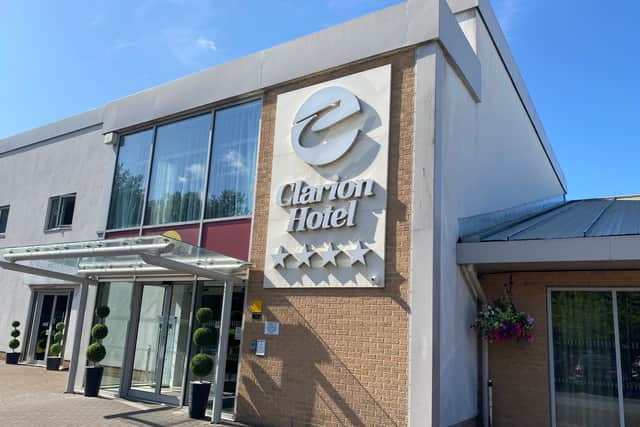
The first stage of hearings have been completed over a two week period from July 8-17 at the Clarion Hotel in Boldon.
The sessions are to help the inspector determine if the plan is ‘sound’.
Issues which were discussed included housing needs and requirements, the amount of development being planned for, spatial strategy and Green Belt issues.
Dedicated hearing sessions were also held to discuss different sites featured in the plan including land in Fellgate, Whitburn, Cleadon, East Boldon, Town End Farm, Hebburn and Wardley Colliery.
Numerous speakers from a variety of community groups and organisations, along with council officers, all attended and voiced their views as part of the process.
Inspector David Spencer, appointed by the Secretary of State to conduct the hearings, speaking on the final day of the initial sessions, noted a second stage of hearings will now be held, with two weeks at the end of November pencilled in for this to take place.
This will consider issues not discussed to date, including policies for development management, minerals and waste matters and site proposals and policies within the main urban area, including regeneration improvement areas.
Mr Spencer noted he also may want to revisit some of the matters already discussed.
He added it comes as various action points have been agreed with the council for more information to be provided on issues which arose during the initial hearings.
Local authority legal representatives stated they hope to provide relevant responses the week commencing August 18.
Mr Spencer provided more information on how the stage two hearings will be carried out – with in-person sessions again being held to discuss key topics of the greatest importance and interest to the public.
Meanwhile some sessions over more minor issues are set to be held electronically to be more efficient and reduce costs.
Mr Spencer said: “For things like the site specifics I prefer to sit in person in a community where people who are going to be affected by sites can feel that they’re being listened to and it’s happening in their areas.
“So certainly for the further sites when we come to them in the main urban area or any kind of revisitation of strands of what we’ve discussed at matter one I want to be in South Tyneside.
“I think there are some development management policies that would also benefit from being discussed here in the borough. “
He added: “For the development management polices that have perhaps got less representations or are less significant soundness issues I’m very comfortable about doing that via teams or an electronic format.”
He also noted he will now produce a post hearing letter that pulls together some of the issues raised so far, which he hopes will be completed “in a matter of weeks not months.”
The inspector wrapped up proceedings by thanking the council for organising and engaging with the initial hearings, along with thanking those who attended to voice their views as part of the process.
Mr Spencer concluded: “I think it’s been good that it’s been accessible, particularly to some of the communities that are closest to some of the issues that we’ve been discussing.
“I appreciate these things are never easy or straightforward to organise and pull together.”
Following the hearings, the usual procedure is the inspector will consider everything presented and let the council know if any changes need to be made to the plan, known as ‘main modifications’, and these are then consulted on by the council.
The inspector then produces a final report which is sent to the council and will be published on its website.
The council will then need to decide if it wants to formally adopt the plan as local planning policy – with the local authority only able to adopt the plan with the changes recommended by the inspector.
For more information on the hearings and links to recordings of proceedings so far residents can visit https://www.southtyneside.gov.uk/article/24174/Local-Plan-examination.