
‘Remain committed’ - Almost 75% of nurdle cargo recovered following a spill in the River Tyne
South Tyneside Council has revealed that almost three quarters of the nurdles spilled into the River Tyne have been recovered.
Partners working to clean up nurdles that were spilled into the River Tyne are reviewing the latest scientific and technical advice as almost 75% of the plastic pellets have been recovered.
Matt Beeton, the Port of Tyne’s CEO, has previously told the Shields Gazette that it took just “five seconds” to spill 17 tonnes of nurdles into the River Tyne.
The spill followed the Wind Ocra vessel colliding with the berthed BG Orange on Sunday, July 19, which also caused a gantry crane on the Port’s quayside to collapse.
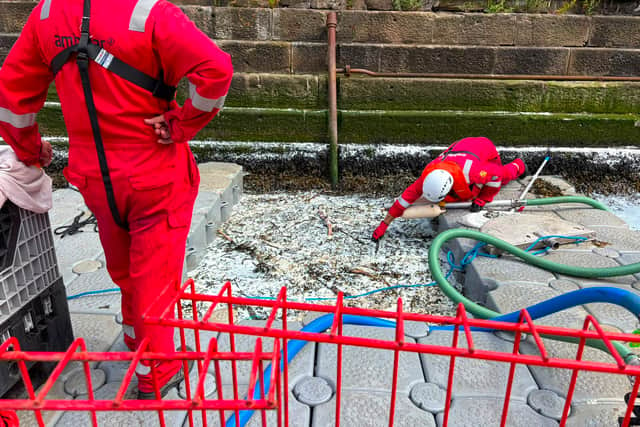

Almost 75% of nurdle cargo recovered
On Monday, September 28, South Tyneside Council has stated that almost three quarters of the 17.92 tonnes spilled have been recovered.
The local authority has stated that 4.78 tonnes in cleaned weight have been confirmed as recovered through on-water and shoreline operations as of September 3.
Between September 3 and September 23, figures show a further 358.85 kg (0.36 tonnes) have been recovered through shoreline and on-water operations.
It means that the total recovered from the water and beaches is 5.14 tonnes.
The Council states that amount added to what the Port of Tyne were able to remove from damaged containers on board the BG Orange means that almost 75% of the original nurdle cargo has now been recovered.
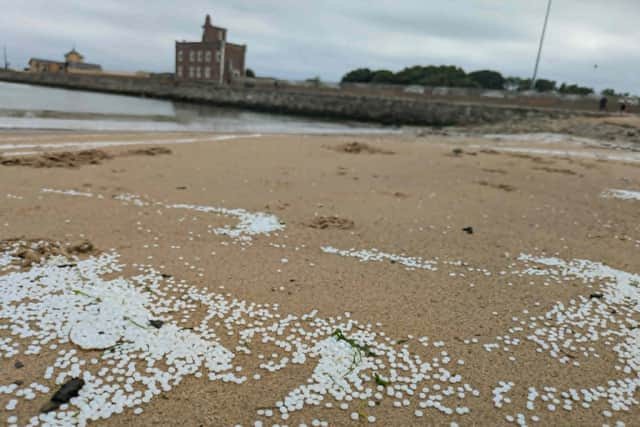
Taking a scientific approach
As the operation continues, the Scientific and Technical Advice Cell (STAC) has reviewed the recovery data, shoreline surveys and specialist modelling undertaken by Newcastle University and the Centre for Environment, Fisheries and Aquaculture Science (Cefas).
The modelling indicates that many of the spilled nurdles are likely to have dispersed beyond the Tyne estuary, while some material may remain within the river system.
It also suggests that the plastic pellets may continue to wash up on parts of the North East coastline in the future due to weather conditions, tides and winds.
Dr Robert Bradburne, STAC Chair said: "The evidence gathered over recent weeks has significantly improved our broad understanding of how the nurdles are likely to have moved through the Tyne and wider marine environment.
"Our assessment indicates that a substantial proportion of material is likely to have dispersed offshore.
“The modelling also helps us understand broader transport patterns, although there remains uncertainty about exactly where nurdles may appear in future.
"The advice provided by STAC is intended to help recovery partners make evidence-based decisions about future recovery, monitoring and response activity.
“As with any environmental incident of this nature, ongoing monitoring remains important and the situation should continue to be reviewed as further evidence becomes available."
The STAC has recommended a multi-evidence approach to support future decision-making, with consideration to recovery data, environmental monitoring, scientific modelling and shoreline surveys to help determine where activity should be focused and when intervention may be required.
It also recognises that the complete recovery of every nurdle is not considered to be achievable.
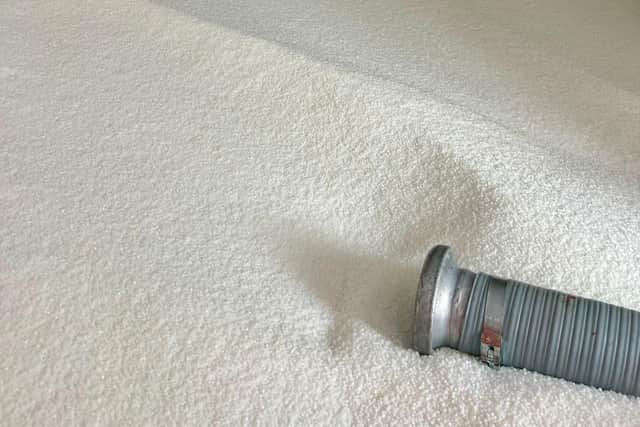
‘We will continue to review evidence’
Recovery operations continue to be delivered through a coordinated multi-agency response, working with specialist contractors to carry out shoreline and on-water operations.
Gary Kirsop, Director of Community Operations at South Tyneside Council, commented: "Recovery partners remain committed to responding to this incident and continuing to work together to protect our coastline and river environment.
"The scientific advice gives us an important framework for determining how recovery and monitoring activity should continue.
“We will continue to review evidence, adapt our response where necessary and keep stakeholders and local communities informed."