
South Tyneside Council issues volunteer nurdle clean up guidance - this is how you can help
South Tyneside Council has given guidance on how volunteers can help with the nurdle clean up.
Volunteers who are wanting to help clean nurdles from the borough’s coastline have now received guidance from South Tyneside Council.
It is estimated that around one billion plastic pellets, known as ‘nurdles’, spilled into the River Tyne following a ship collision at the Port of Tyne on Sunday, July 19.
Since then, nurdles, which are the raw material of manufacturing plastics, have been washing up on beaches across the North East.
South Tyneside Council has partnered with expert organisations to help with the clean up and the local authority has now issued advice on how members of the public can help.

This is how you can help clean up nurdles in South Tyneside:
What equipment do I need?
You don’t need any specialist equipment to get involved in the nurdle clean up operation as they can be picked out of the sand by hand.
South Tyneside Council has stated that those taking part should wear gloves and not handle nurdles with bare hands.
Other handy equipment would include things like heavy-duty bags that can be collected by the council, sieves, a dust pan and brush, buckets, and ‘nurdle sifting bags’ from South Shields Surf School.
Where should I put the nurdles I collect?
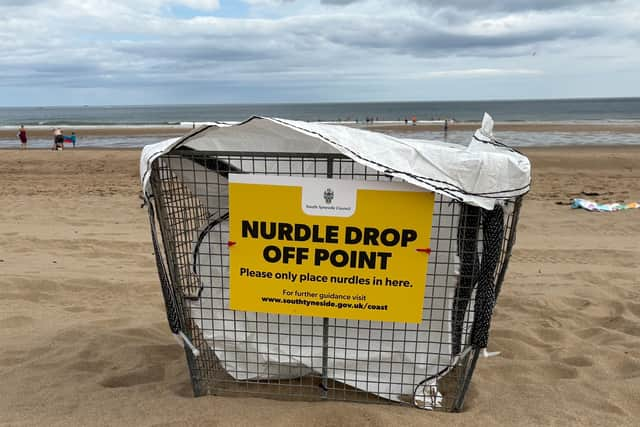
South Tyneside Council has placed ‘nurdle drop off points’ at both Littlehaven and Sandhaven Beaches.
At Littlehaven, the drop off points are beside the Conversation Piece and the fair.
At Sandhaven, there is drop off points on the beach behind the skatepark, beside the south entrance to the amphitheatre and to the south of the beach, beside the Trow Quarry car park.
Is there anything I should avoid?
South Tyneside Council is asking volunteers to stay off wet sand the tideline wherever possible, as well as keeping an eye on changing weather and sea conditions.
Those wanting to help with the clean up should check tide times and only work in areas that can be accessed safely.
The local authority is also urging the public to be aware of other hazards that may be present in a beach environment, such as fishing hooks, broken glass and other items on the foreshore.
Volunteers should avoid walking over areas where nurdles have accumulated as foot traffic can push them deeper into the sand.
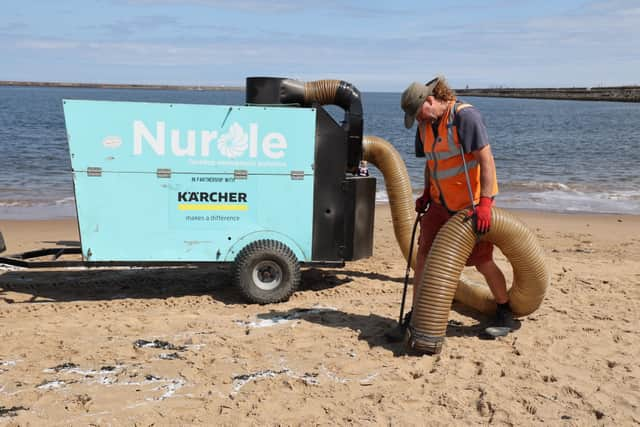
They should also stay clear of contractor vehicles, machinery and marked work areas as specialist teams are operating equipment on site.
Anyone who discovers a large concentration of nurdles is asked to report it via: [email protected] rather than attempting to clean it themselves.
When is best to help?
There isn’t really a ‘best time’ to help as volunteers are encouraged to head along to the coast whenever they are free to take part in the clean up.
The surf school has also revealed that the following times are when the high tides will have pushed the nurdles onto the beaches:
- Wednesday, July 29: 4.45pm until 9pm.
- Thursday, July 30: 6am until 10am and 5.30pm until 9.30pm.
- Friday, July 31: 6am until 10am and 6.15pm until 9.30pm.
- Saturday, August 1: 6am until 10am and 6.30pm until 9.30pm.
Full details can be found at: http://southtyneside.gov.uk/article/31271/Volunteer-guidance-for-plastic-pellets-nurdles.