
Controversial bid to turn South Shields guest house into 14-bed HMO faces crunch hearing to decide its fate
Controversial plans to convert a former South Shields guest house into a 14-bedroom house in multiple occupation (HMO) are due to go before councillors for decision next week.
South Tyneside Council’s Planning Committee will discuss an application for an address at Mill Dam, referred to in council planning documents as the former Mill Dam Guest House.
The site sits near the Grade II-listed Customs House and documents submitted with new plans for the site noted the guest house “currently stands vacant.”
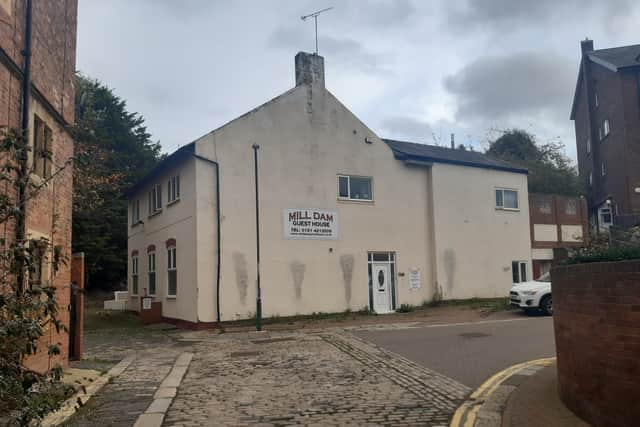

According to a heritage, design and access statement linked to plans for the Mill Dam Guest House site, the proposed HMO use would “ensure ongoing maintenance and positive contribution to the conservation area”.
Applicants said this was due to the “external fabric” of the building “showing some deterioration, with replacement of windows required to improve thermal performance and visual consistency”.
Those behind the scheme said internal works linked to the HMO conversion would “consist mainly of non-structural partition walls to create individual bedrooms and en-suite facilities” and noted the wider development would “bring a vacant heritage property back into beneficial use while preserving its contribution to the Mill Dam Conservation Area”.
It was noted that “communal kitchen, living and dining spaces will be provided in accordance with licensing standards” and that “new heritage-style windows will replace the existing units, maintaining the proportions and profiles appropriate to the conservation area”.
To the rear of the property, bin and cycle stores were planned and it was noted that existing car parking provision would also “remain unaltered.”
The applicant is listed as Moore Apartments Ltd and supporting planning documents noted the HMO plans would “cause no harm to the overall character or appearance of the Mill Dam Conservation Area”.
It was also noted that “works are fully reversible, ensuring the building can be adapted in future without loss of significance” and that public benefits included “reusing and maintaining the building, improving housing choice, and enhancing the local streetscape”.
There was no reference in the developer’s heritage, design and access statement to the target tenant profile for the proposed HMO.
During a council public consultation exercise the plans sparked opposition, with “47 representations received in objection to the proposal”, including “one petition with 19 addresses”, council documents state.
Concerns raised included “harm to designated heritage assets including the Mill Dam Conservation Area and nearby listed buildings”, the “intensification of the existing use” and impacts on “community cohesion”, crime and antisocial behaviour, parking pressures, waste management, safeguarding and more.
Public objections were also referenced noting that “Mill Dam is undergoing regeneration and attracting tourism [with] fears that an HMO will deter visitors and harm local businesses.”
There were also objections to the HMO application from all three Beacon and Bents ward councillors, including councillor David Francis who called the application before the Planning Committee for decision.
The representation from ward councillors raised concerns about “inadequate and unsustainable” parking provision, antisocial behaviour and historic issues with the site when it was previously in use, impacts on “local community” and a “cultural quarter”, the HMO representing a “harmful intensification of use”, and the plans “conflicting with the heritage and character” of the local conservation area.
Emma Lewell, the MP for South Shields, also made two representations which were summarised in a council report, raising concerns and asking for the application to be referred to the council’s Planning Committee.
The MP said she “fully accepted that the former guest house requires investment and improvement, but did not accept that the only choice is to allow it to be turned into yet another HMO in the town centre, with tiny rooms and minimal shared space that do not equate to long- term, good quality, sustainable social housing”.
Emma Lewell’s statement added: “It is well documented that some HMOs in the town centre become a focal point for antisocial behaviour, especially for people who rely on drugs or alcohol.
“It would be a catastrophe to invite and incubate such potential problems right next to the successful businesses that depend so heavily on their customers, such as the established public houses, restaurants and theatre that are right next to this building.
“It would also be catastrophic to the small and tightly-knit neighbourhood that shares its immediate space with this building.”
Other points and concerns raised by the South Shields MP included the importance of “supporting, retaining or redeveloping existing visitoraccommodation in the town centre”and parking pressures from the new HMO use, as well as reference to the “serious and justified concerns” raised by local residents.
South Tyneside Council’s planning department, in a report published ahead of a decision-making Planning Committee next week, has recommended the HMO development for approval.
Council planners, in the committee report, said the “greatest weight in deciding this application” needed to be given to national planning policy [National Planning Policy Framework], rather than local policy, “given that the application includes housing development and the council’s housing land supply/delivery deficiencies”.
It was noted that the planning application should be granted “unless any adverse impacts of doing so would significantly and demonstrably outweigh the benefits when assessed against the policies in the framework taken asa whole”.
Council planners said the HMO proposal would provide “social, economic and environmental gains by contributing to reducing the current shortfall in terms of housing supply” and “in terms of environmental benefits” which would “bring a currently vacant building back into use”.
They added that “no significant harm or adverse impacts have been identified in respect of residential amenity, biodiversity, highway safety, impact on the character or appearance of the conservation area or the setting of listed buildings, or in respect of crime/anti-social behaviour/fear of crime and flood risk/drainage”.
Council planners also noted there had been no objection from the council’s transport development officer on parking issues.
On the matter of heritage impacts, they added that key listed buildings were not “readily visible from the application site” and did not have “any clear functional relationship with it” and that the HMO would “not affect the settings of these heritage assets”.
The council committee report adds: “Overall, in this instance the adverse impacts arising from the proposal are not considered to significantly and demonstrably outweigh the benefits associated with the development.
“The proposal would represent an acceptable and sustainable form of development and therefore benefits from the presumption in favour of sustainable development.
“There are no material considerations which indicate that a decision should be otherwise and therefore the application is recommended for approval.”
The HMO plan will be discussed and put to the vote at a meeting of South Tyneside Council’s Planning Committee on Monday, January 12, at South Shields Town Hall.
The meeting is scheduled to start at 10am and will be open to the public.
For more information on the plan, or to track its progress, visit South Tyneside Council’s planning portal website and search reference: 250590
For the latest public notices from your area, please visit: https://publicnoticeportal.uk/