
Newly discovered diary gives a fascinating insight into South Tyneside life in the early 1900s
South Tyneside diary from early 1900s talks of ‘work, the ale house and football’
A diary has given a valuable insight into South Tyneside life in the late 1800s and early 1900s.
Tram cars, railways, football, work and ale houses all feature in the work which was compiled by William George Footitt who lived from 1865 to 1936.


He was a skilled draughtsman and kept a diary between 1897 and 1914, to document his personal and professional life.
Dr Michael Johnson, Assistant Professor of Design History at Northumbria University, will be giving a free talk about it at Newcastle Central Library on Thursday, April 30, at 6:30pm.

Dr Johnson has shared extracts from it with the Shields Gazette and they include this insight.
“But electricity is looming up as a rival of King Steam, a line of over-head (wires) electrical tram-cars being almost completed from North Shields to Jarrow, Etc.
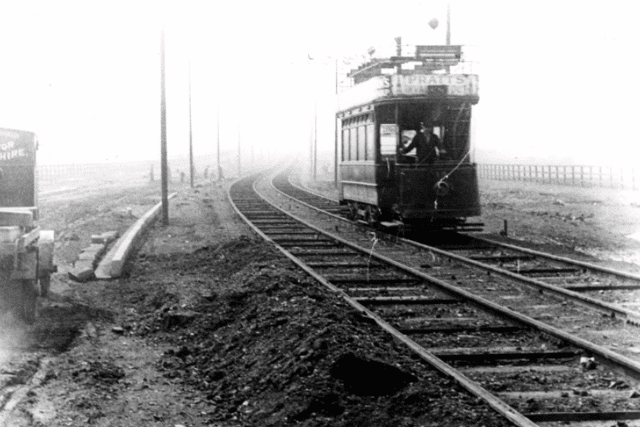
Footitt worked for Charles Hodgson Fowler, one of the leading church architects of his generation. Footitt was involved in the design of a new chancel for St Oswald’s Church in Hebburn.
He described his train visits to the borough as ‘along the busy Tyneside to Jarrow! where all is fire, smoke, steam & clang, clang, clang!”
His diary entries later added: “So what with our huge warships, & railway engines, our electric trams & our motors, I think our forebears of the flint instruments period would scratch their heads a little could they come back to see.

“And yet, when all is said & done the blessings & pleasures of Life are badly distributed, the main purpose of almost the whole of the mining, engineering, chemical & other industries, shipbuilding & railways, being to make profits for the shareholders, who are but a small minority of the people concerned, of course.”
Footitt comments on ‘the continual grind, grind, grind, from the early morning till even, seems, as Carlyle said, to crush the soul out of a man. It is true that to very many, a majority, perhaps, work, the ale-house, & a football match are the be-all & end-all. They do know how to enjoy sport, & thick-twist tobacco!!”
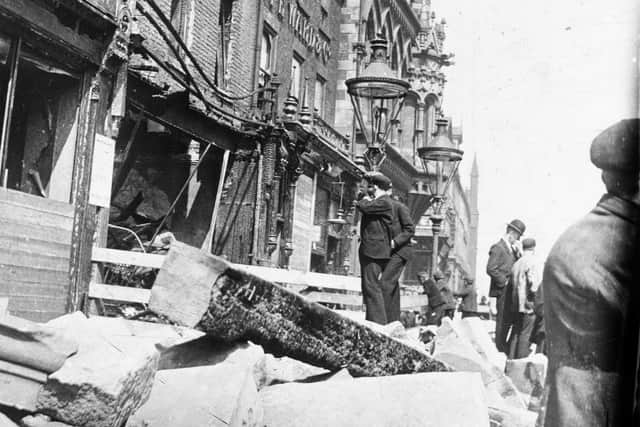
It also looks at Sunderland life including the 1898 Great Fire of Sunderland.
He watched as the First World War approached. He recorded soldiers guarding the quays, artillery horses passing through Grangetown and recruitment speeches being delivered to football crowds at Roker Park. The familiar routines of football, theatre and seaside excursions continued, but against a backdrop of increasing anxiety.
Footitt’s diary was given to Dr Johnson for transcription and editing and he said: “After two years of work, the full text has now been published by Boydell & Brewer, bringing Footitt’s observations into the public domain for the first time.
To inaugurate this year's Local History Month, I'll be giving a free talk about Footitt’s life and work.