
Remembering the South Tyneside 'Man With The Donkey' 111 years on from his heroics
The Shields hero who saved 300 soldiers
A South Shields hero who saved hundreds of soldiers will be remembered today on both sides of the world.


ANZAC Day has a special connection to the borough through South Shields-born Private John Simpson Kirkpatrick, who was known as ‘The Man with the Donkey’.
Kirkpatrick risked his own life to rescue more than 300 wounded Australian and New Zealand soldier from the frontline during the Gallipoli campaign of 1915.
He carried the soldiers to safety using his trusted donkey Duffy until he was killed at the age of 22 by a sniper’s bullet on May 19, 1915.
South Tyneside has always honoured the man and the John Simpson Kirkpatrick memorial statue on Ocean Road, in South Shields town centre is where a service of commemoration is held.
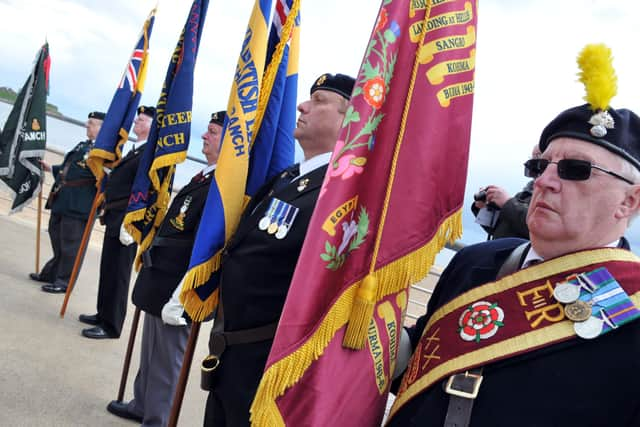
A memorial at Littlehaven Promenade was unveiled in 2015 to mark the 100th anniversary of Kirkpatrick’s death and the Gallipoli campaign.
His legendary bravery has inspired generations of people and he is still highly regarded in Australia where his amazing story is told to school children.
John Simpson Kirkpatrick was born in Bertram Street, South Shields, on July 6, 1892.
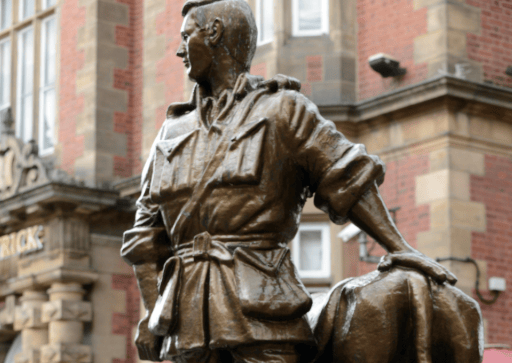
Before World War One he worked with donkeys on South Shields beach, and had served with the 4th Durham Volunteer Artillery, before setting sail to Australia as a merchant seaman in 1910.
At the outbreak of the 1914-18 conflict he enlisted in the Australian Army Medical Corps under the name John Simpson’.
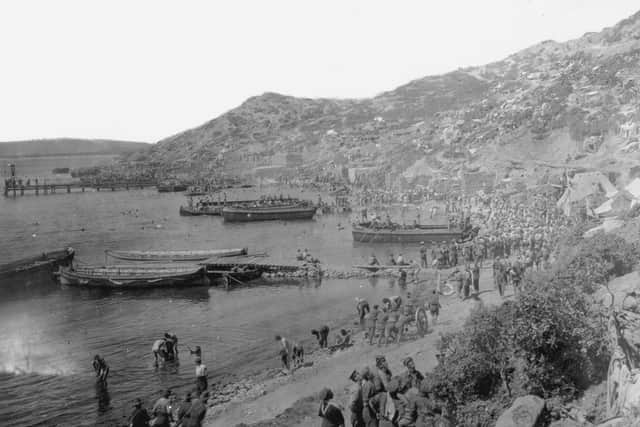
Eight months later, Simpson landed at Anzac Cove, Gallipoli, as a stretcher bearer. On April 25 1915, he obtained a donkey and began carrying wounded soldiers from the frontline to the beach for evacuation.
He was a member of the field ambulance at Gallipoli and had joined the army in the hope he would be able to return back to his hometown of South Shields.
When enemy fire was at its worst, orders were posted that ambulance men must not go out, but Simpson ignored these and continued rescuing his comrades. He continued this work for three and a half weeks.
Ten years ago, his will was digitised for all to see and showed that he had left everything he had to his mum in South Shields.
Thousands of wills from those who lost their lives in the war were digitised and placed online by the State Records Office of Western Australia.
The tale of the South Shields man and his donkey came to symbolise the Anzac spirit.