
Major update on huge South Tyneside battery energy storage facility for old filming location
Plans for a huge battery energy storage facility in South Tyneside are due to go before borough councillors for decision next week.
South Tyneside Council’s Planning Committee will vote on an application for outline planning permission for a site in the borough’s Bede ward.
The site, which sits off Church Bank in the Jarrow area, was once linked to timber importers and sawmillers M H Southern but the company, in recent years, has moved operations from South Tyneside to Gateshead.
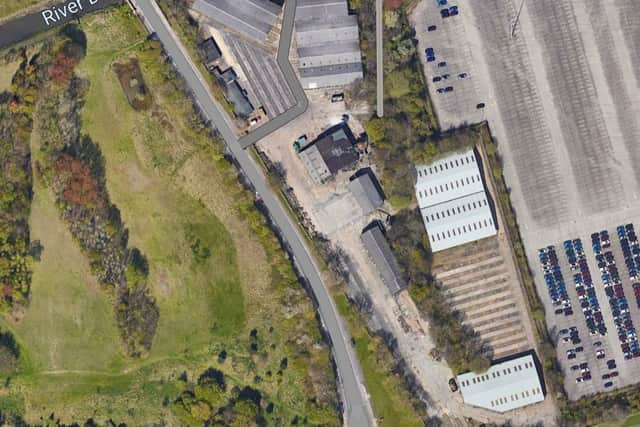

Developers have been eyeing the Church Bank land for a battery energy storage system (BESS) for some time, with BESS schemes aiming to import and store electrical power during periods of oversupply in the National Grid, and export it back into the energy network when needed to help ‘balance’ the grid.
Several applications for BESS developments have been approved in the region in recent years, including at a site near the A19 in Sunderland and a site in West Boldon, and at another site at Hastings Hill Farm on Wearside, with the developments cited as a key part of the UK’s move towards Net Zero, helping more renewable energy to be brought online.
Plans to demolish industrial buildings and structures at the Jarrow site earmarked for a new BESS were approved in July, 2025, and the submission of an outline planning application later the same year represented the next step towards the energy storage development becoming a reality.
A supporting planning statement submitted with the application on behalf of applicant AMG Utility Solutions Ltd said plans include “the installation of a BESS and associated grid-connection infrastructure, internal access, landscaping, sustainable drainage and other ancillary works”.
Those behind the scheme said the site’s location had “excellent grid and transport connections, capable of accommodating the proposed battery energy storage system without adverse effects on residential amenity, landscape character or heritage significance.”
Those behind the scheme said that the proposal “represents an efficient and sustainable reuse of brownfield land inside a strategic employment corridor” and could be “delivered without undue impact on the environment or surrounding operations and will make a significant contribution to clean-energy infrastructure.”
Battery energy storage developments normally include a concentration of battery units, or ‘energy storage cabinets’, along with associated infrastructure, and BESS developments can include hundreds of units depending on the size and constraints of individual sites.
A design and access statement noted “plant and equipment will occupy only the central portion” of the Jarrow site, “leaving generous perimeter zones for landscaping, habitat creation and future access improvements” and that the “precise footprint will be determined at [the] reserved matters stage once the layout and final supplier specifications are known.”
During a council public consultation exercise on the battery energy storage development there were no representations submitted.
Council planning officers, in a report published ahead of a decision-making meeting next week, have recommended the planning application for approval.
The council committee report said the “proposed development would be acceptable in principle and in terms of the amount of development, the scale and layout, environmental impacts, its impact upon heritage assets, traffic and road safety, and residential amenity”.
South Tyneside Council’s Planning Committee will be recommended to approve the planning application “subject to a Section 106 Agreement and the list of conditions”.
This includes securing a financial contribution towards “biodiversity net gain monitoring” and conditions linked to the submission of a reserved matters application, subject to outline plans being approved.
Council planners, in a committee report discussing the outline application, said “it is recognised that battery storage facilities are a key component of energy facilities in the UK, since they are able to store excess electricity generated by renewable energy facilities when demand is low and release energy to the grid at periods of high demand, or when electricity generated by renewable sources is low”.
In this context, and the context of South Tyneside Council’s borough-wide climate emergency declaration in 2019, the principle of the development was deemed acceptable.
This includes the plan meeting policy aims around “environmental benefits in terms of supporting/promoting renewable energy generation and associated carbon reduction” and supporting “the future development needs of the Port of Tyne.”
A supporting statement submitted with a previous ‘screening opinion’ request for the site noted vacant industrial buildings would be demolished in advance of construction and that the “final element” of the BESS scheme would see the installation of a below ground cable to connect the facility to the National Grid.
The supporting statement added “it is anticipated that the proposed development will be constructed over a period of 8 to 12 months” and that the BESS would be capable of storing around “100MW of energy.”
Those behind the plans also confirmed the development would also be designed in line with national guidance to prevent fire risks and that a battery safety management plan would be linked to the scheme.
The meeting is scheduled to take place from 10am and will be open to the public.
For more information on the planning application, visit South Tyneside Council’s planning portal website and search reference: 250408