
Major update on new six-bed HMO for South Shields street after fears of 'disturbances' raised
Plans for a new six-bedroom house in multiple occupation (HMO) in South Shields, opposed by local residents and the town’s MP, have been blocked by councillors.
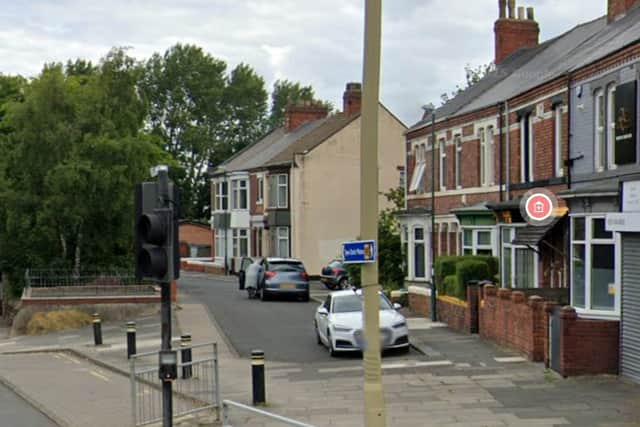
South Tyneside Council’s Planning Committee, at a meeting this week, discussed and voted on plans for 10 Belle Vue Crescent in the town’s Biddick and All Saints ward.
Plans from Northcrest Estates Ltd sought permission to convert the site from a residential dwelling planning class to a “six-bed, six-person house in multiple occupation” made up of bedrooms across three floors and a shared communal kitchen, with each bedroom having bathroom facilities.

The application falls against a backdrop of South Tyneside Council’s recent decision to launch an “immediate” borough-wide Article 4 Direction removing permitted development rights for small HMOs, meaning that planning permission is now needed for all HMOs across the borough.
The council ruling has led to a large number of HMO applications being submitted to the council’s planning department in recent months.
A planning application from developers noted that no work or change of use had started at 10 Belle Vue Crescent but confirmed that the site is not vacant.
A design, access and planning statement from developers said the development would “retain the building’s existing aesthetics on the front façade facing Belle Vue Crescent” which “ensures the proposal maintains the existing street scene and character of the area”.
It was also argued that the change of use would “contribute to the mix of housing available in South Tyneside” and that “small HMOs provide a vital source of affordable accommodation for young professionals and key workers”.
In terms of the location, applicants said the “level of occupancy is not significantly higher than that of a large family which could occupy the existing dwelling” and that the site is in a “mixed-use area near Stanhope Road, where higher-density living is appropriate and supported by infrastructure.”
South Tyneside Council’s planning department, in a report published ahead of a decision-making Planning Committee this week, had recommended the HMO for approval.
Council planners said the “greatest weight in deciding this application needs to be given to the NPPF [national planning policy framework] as opposed to local planning policy, given that the application includes housing development and the council’s housing land supply/delivery deficiencies”.
It was noted that the proposal would “provide social and economic gains by contributing to reducing the current shortfall in terms of housing supply” and that “no significant harm or adverse impacts have been identified in respect of visual and residential amenity, biodiversity, highway safety, or in respect of crime/antisocial behaviour/fear of crime and flood risk/drainage.”
During a council public consultation exercise on the plans there were around 13 objections received raising concerns about the property’s close proximity to a primary school entrance and the development creating an “overconcentration” of HMOs in the area, as well as concerns about noise and disturbance, increased traffic, the future management of the HMO and more.
A representation from Northumbria Police recommended reducing the number of bedrooms from six to five and the smallest bedroom being “converted into a communal room to allow the residents to socialise together within the building.”
A representation from Emma Lewell, the MP for South Shields, objected to the plans and asked for the application to be referred to the Planning Committee for decision.
The South Shields MP’s objection, set out in a council committee report, included concerns about the “permanent loss of a spacious family home on a quiet residential street in close proximity to nearby schools and nurseries” and the plans leading to a “much more intensive use of the property in comparison to a typical family home”.
It was noted that “six unrelated adult tenants would all potentially have their own family, friends, visitors, cars and deliveries, increasing the expected comings and goings in comparison to a family property, affecting traffic and parking; and increasing the chances of excessive general noise, and potential noise and disturbance at unsociable hours”.
The MP’s statement added: “Constituents have raised concerns that Tyne Dock is a high crime area, and that an HMO could potentially escalate the problem and bring increased disruption with antisocial behaviour.”
Councillor Rachael Taylor, Biddick and All Saints ward councillor, also called the application into the Planning Committee for decision and said the application “raises material planning considerations that warrant councillors on the Planning Committee to scrutinise them.”
Members of the Planning Committee discussed and voted on the HMO application at South Shields Town Hall on March 9, 2026.
Council planners, in a presentation to the committee, said the principle of the six-bed HMO proposal was acceptable, that there would not be any harm in terms of “cumulative impact” and that the development could operate without “significantly harmful” residential amenity impacts in terms of noise and disturbance.
On concerns about crime and antisocial behaviour, council planners said the management of a HMO via a council issued HMO licence would “place obligations on the licence holder to maintain the property and to manage their tenants.”
A number of members of the public raised concerns at the Planning Committee about the “nightmare” parking situation locally, given the site’s proximity to businesses, a school and a Metro station, along with concerns about existing antisocial behaviour in the area.
A representative for the applicant also spoke at the meeting noting that the development would be “well-managed, good quality housing suitable to working professionals and key workers, rather than lower quality shared accommodation sometimes associated with HMOs”.
It was noted that there was “no evidence that small licensed HMOs would generate harmful levels of crime or antisocial behaviour.”
On parking matters, the applicant’s representative noted that the council’s highway authority had raised no objections and that there was a public car park and other parking provision available near the application site.
Councillor Chris Davies referenced a previous HMO application on the same street at 3-4 Belle Vue Crescent, which was rejected by the Planning Committee earlier this year (2026), and said that the concerns raised over this application apply to the new HMO plan.
Councillor Joan Hamilton raised concerns about recommendations from the council’s community safety team and Northumbria Police around the management of the HMO and antisocial behaviour and said the comments raised a “red flag” over the proposed development.
Councillor Paul Brenen raised similar concerns about antisocial behaviour and said allowing the HMO plans would also “change the character of the local area”.
“The Article Four Direction that we brought in gives the power to this committee to stop that basically, we decide where we want these HMOs and I think this location is a bad location,” Cllr Brenen added.
Councillor Shirley Ford said there would be impacts on residential amenity and the character of the area and argued that there was an “overconcentration” of HMOs in the wider area.
While welcoming the management plan provided by the applicant, Cllr Ford said the HMO plan represented an “intensification of the use of that property, increasing it from one household to six separate households.”
Councillor Neil Maxwell questioned a representation from the council’s highway authority that the proposed HMO would be “likely to generate similar or less parking than the previous use.”
Councillor David Kennedy also said the “cumulative impact on the area is very risky” around HMOs and questioned the council guidance used to assess “overconcentration” levels.
After being put to the vote, the Planning Committee voted unanimously to refuse the planning application on several grounds.
The proposal to refuse the application, raised by Cllr Brenen, included “cumulative impacts” on the area, “adverse impacts” on the character of the area and the residential amenity of existing occupiers and “unacceptable impacts” on parking and highway safety.
The applicant has the right to challenge the council’s refusal decision by lodging an appeal with the Secretary of State.
For more information on the HMO plan, visit South Tyneside Council’s planning portal website and search reference: 250805