
South Tyneside council tax set to rise again as £11.8m of savings planned – budget plans in full detail
South Tyneside Council has revealed its budget plans for 2026/27, with another council tax rise and more than £11 million of savings proposed to balance the books.
Proposals in the borough’s medium-term financial plan (MTFP) for 2026-2031, published this week, aim to deliver a balanced budget against a backdrop of increasing cost pressures and spending cuts.
South Tyneside Council has proposed council tax increases in recent years to keep frontline council services running, and has seen more than half its Central Government funding slashed since 2010.

Plans for the 2026/27 financial year see a similar picture, with the council needing to save a further £11.8 million, which will impact on departments and staffing and a number of services across the council.
The council states that the budget for the coming financial year outlines a “bold and proactive approach” to delivering key investments and protecting essential services despite, what budget documents describe as, “our most challenging financial plan in over a decade.”
The plan, which will go before the council’s Labour cabinet at a meeting on February 4, 2026, sets out how the local authority will continue investing in residents’ priorities, modernising services and safeguarding support for the most vulnerable, while also managing significant increases in demand and reduced Government funding.
Rising demand in adult social care, children’s services and SEND transport continues to place “substantial strain” on budgets, the council has said, while inflation, increased complexity of need and national funding constraints mean the council needs to spend more to maintain its current levels of service.
Under the new funding arrangements for councils, South Tyneside Council received a multi-year settlement from Central Government, with the “phasing in of new allocations over three years”, which aims to help councils better manage finances over the medium term.
This includes South Tyneside Council being “£1.5 million better than previous modelling for 2026/27 but £2 million worse off for 2027/28 and £2 million worse off for 2028/29”.
While acknowledging that an “estimated £24 million deficit in 2027/28 and 2028/29 will be extremely challenging to address”, the OSCC presentation noted that efforts were under way to “maximise savings to start to build back reserves” and “reduce future service cuts and post reductions.”
To ensure support for frontline services remains strong, the council is investing in new care models and prevention services, as well as expanding in-borough children’s accommodation to reduce costly out-of-area placements and considering the introduction of “innovative approaches to SEND transport”, such as independent travel training and personal travel budgets.
The measures aim to “improve outcomes and manage future demand more effectively”, with more details expected in future.
The council is also prioritising safer, stronger neighbourhoods, with £500,000 allocated to continue its community responders function, which the council states reflects residents’ “top priority” around tackling antisocial behaviour, as evidenced through consultation.
Other key measures include continued subsidies towards services, including for school milk and school meals, as well as continuing efforts to promote footfall and prosperity in town centres.
Councillor Jim Foreman, cabinet member for governance, finance and corporate services at South Tyneside Council, said the council was operating in “the most challenging financial environment local government has faced in over a decade”.
“South Tyneside is no exception, especially with changes in the distribution of national funding,” Cllr Foreman added.
“We are legally and morally obliged to try and protect vital services like adult social care, children’s services and SEND transport.
“Doing the right thing for those who need us most inevitably means there is less to spend elsewhere.
“The proposals prioritise what residents told us matters most through consultation, including tackling antisocial behaviour, revitalising neighbourhoods, and bringing in external funding for major regeneration and capital schemes in our town centres.
“Where changes are proposed, they focus on making efficiencies, modernising and redesigning services so they can be sustained into the future.
“Our plan is clear in its ambition: to remain financially sustainable while continuing to invest in residents, neighbourhoods and the borough’s long-term future.
“This is a responsible and balanced budget that safeguards essential services today and seeks to make them sustainable for the future.”
To balance the budget, the council must deliver £11.8 million of savings in 2026/27 which will be achieved through what the council describes as “targeted efficiencies, service redesigns and income generation” including:
- Streamlining adult social care charging policies to “ensure consistency and sustainability while still protecting the most vulnerable.”
- Making “small adjustments” to library opening hours to “modernise operations” while keeping all main sites open six days a week.
- Making “targeted reductions” to some non-statutory voluntary and community sector grants, while strengthening collaboration and alternative funding routes.
- Updating the events programme, including introducing “reasonable charges for selected summer concerts” to help “keep much loved community events sustainable for the future.”
The council said the proposals have been informed by extensive public consultation and are supported by equality impact assessments to ensure fairness and transparency.
The council’s £11.8 million “budget gap” will be partly addressed by around £535,000 of “specific grants” to reduce the overall savings, or “service efficiencies”, to around £11.2 million.
Proposed budget savings in the council’s “business and resources” area total around £5.4 million, including savings around “support services” looking to save £2.1 million via the use of technology and post reductions, along with a “management review” looking to save around £1.3 million and a number of other proposals.
In “adult social services and commissioning”, the council is looking to save around £2.1 million through a range of proposals including changes to contracts, resources and some charges.
One proposal in this area, described as “collaborative system diagnostic”, aims to save £1.3 million and includes partnership work with Sunderland City Council, the region’s Integrated Care Board and South Tyneside and Sunderland NHS Foundation Trust to reduce the number of residents going from hospital into formalised residential care, and to improve support for residents in their own homes.
The council is also looking to save around £1.4 million in its children’s services department, including a “review of children’s day care provision” saving more than £700,000, a review of school meals charges saving around £275,000, and a review of the “family hub model” saving around £250,000, along with other proposals.
Another £1 million of savings are proposed around “place strategy”, including “reduction of subsidy” for adult and community learning, savings around community facilities, building cleaning, housing and assets and more.
A further £740,000 is expected to be saved around “community operations” covering a review of car parking charges in South Shields and an increase in green waste charges, along with planned savings around highways maintenance, school crossing patrols, streetscene and more.
Around £300,000 is also expected to be saved around “governance and corporate affairs” via the review of the council’s events programme, and savings around policy / communications, members services and newsletters.
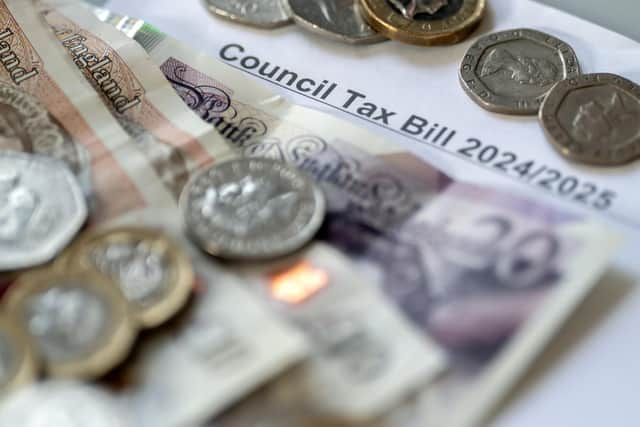
To help bridge the funding gap and protect statutory services, the council is also proposing a 4.95 per cent council tax increase for 2026/27.
This includes a two per cent adult social care precept, which is ringfenced for these services to reflect rising pressures, and a 2.95 per cent general increase in core council tax.
For a Band A property class, into which the majority of South Tyneside’s properties fall, this represents an increase of £66.50 per year, or £1.28 per week.
The council stressed that support remains available for households facing financial hardship through existing welfare and council tax reduction schemes.
Council housing rents will rise by an expected 4.8 per cent, in line with Government guidelines, to ensure continued investment in safe, high-quality homes.
As part of budget plans for 2026/27, the council anticipates a reduction of around 100 posts over the financial year, which is approximately three per cent of the council’s 3,500 filled posts.
The council states it will continue to manage staffing levels carefully by only recruiting to essential posts and notes reductions will be focused on management and back-office functions to protect frontline services.
The council is also expected to consult with staff and trade unions throughout and provide full support to those affected including “opportunities for redeployment where feasible”.
A council spokesperson said that the council would “make every effort to avoid compulsory redundancies” and that while “the vast majority of staff are not affected, we will work closely with those who are to support them during this change.”
Despite a “modest uplift” in core funding announced in the Local Government Finance Settlement for 2026/27, the council warned that this improvement is short-lived.
It added that resources are expected to “flatline and then fall in the years ahead” and that savings required over the next two years are expected to be in the region of £24 million.
However, the council noted its medium-term financial plan is based on “robust estimates” and “sets a path back toward greater financial resilience, including rebuilding reserves to safe levels.”
Despite financial pressures, South Tyneside Council is continuing to invest to benefit places and communities using external funding to support capital investment.
The council’s capital programme is separate to the local authority’s revenue budget, which covers day-to-day spending on frontline services.
The council said that regeneration and growth programmes remain at the heart of its ambitions and include:
- The £95 million Tyne Coast College relocation to South Shields, transforming education and skills opportunities in the town centre.
- £20 million Pride in Place funding in Jarrow, driving a ten-year programme to revitalise the town centre and boost opportunities for local people.
- £2 million investment in Hebburn Football Club’s community facilities, enhancing local sports and education spaces.
- Continued transformation at Holborn Riverside, delivering hundreds of high-quality homes and a new riverside promenade.
- Ongoing upgrades to highways, transport connectivity and digital infrastructure, supporting access to jobs and economic growth.
- Significant investment in housing, including extra care schemes, new council homes, and major improvements to existing stock.
South Tyneside Council’s cabinet will discuss the MTFP at a meeting at South Shields Town Hall on February 4, 2026.
If approved by cabinet next week, the draft MTFP, capital and investment strategy, and treasury management strategy, will be considered by borough council on February 26, 2026.
Councillor Jim Foreman, the cabinet member responsible for the council’s budget, said changes to Government funding for local authorities, under the new multi-year settlement model, did not just apply to South Tyneside and noted the council is in contact with other councils who are “lobbying for change”.
The senior Labour councillor said that if the Labour Government “gets it right where growth is concerned” with more jobs and taxes being paid, there may be an opportunity, through lobbying, for an improved council funding picture in future.
“No matter what happens we have to deliver a balanced budget,” Cllr Foreman added.
“It’s imperative that we do, so that we don’t get on the wrong side of the Government.
“Everything we have done in this budget has been driven towards delivering a balanced budget and making sure that we save as much as we can because we know that we have got other challenges to come in the future in the next two years.
“Hopefully when the public realise what we have done, they will realise that there’s an element of protection for them, we’re protecting as much as we can at this minute in time.”