
Turkey allocates £2.25bn for AI-powered MOT system

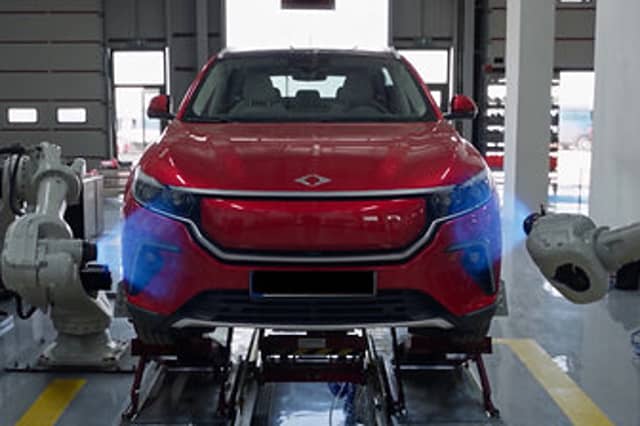

A huge vehicle inspection overhaul will use cameras, lasers, sensors and automation in a bid to transform the way millions of cars are tested.
Turkey is preparing to give its vehicle inspection system a major high-tech makeover, with artificial intelligence, automation and contactless technology set to play a central role.
The country is rebuilding its 20-year-old vehicle inspection system from the ground up as part of a transformation worth around £2.25 billion.
From 15 August 2027, TURKA Vehicle Inspection will operate the system for the next 20 years, with plans to overhaul everything from testing equipment and data management to automation and the experience for vehicle owners.
And the technology is already being put through its paces.
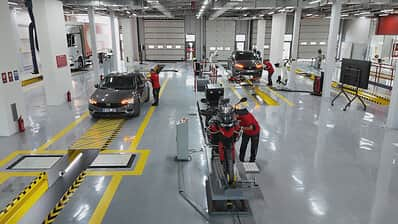
The first testing ground is a 2,500-square-metre Vehicle Inspection Pilot Centre in Istanbul, where new equipment is being trialled on real vehicles.
The five-lane centre is testing a range of futuristic-sounding technology, including AI-assisted imaging, lasers, sensors, contactless tyre measurements, undercarriage and bodywork scanning and robotic equipment.
The idea is to make vehicle inspections more automated, detailed and consistent, while also preparing the system for the increasingly sophisticated cars hitting the roads.
AI will bring vehicle data together
One of the biggest changes will be the way inspection information is collected and assessed.
Data captured by cameras and sensors will be brought together on a central digital platform, where AI systems will assess the results before they are transmitted electronically.
Contactless technology will be used to measure things such as tyre tread depth and uneven wear, even while vehicles are moving.
High-resolution cameras will also provide more detailed checks of a vehicle's underbody, potentially helping inspectors spot problems that could otherwise be difficult to see.
Preparing for electric and connected cars
The overhaul comes as vehicles become increasingly high-tech themselves.
Electric cars, connected vehicles and cars fitted with driver-assistance systems are becoming more common, meaning traditional mechanical checks alone may no longer be enough.
Turkey’s new inspection system is therefore being designed to deal with both the vehicles on today's roads and the technology expected in future cars.
Until 15 August 2027, the Istanbul Pilot Centre will operate as a technology and operations laboratory.
Equipment and software will be tested there, while processes are developed and staff are trained.
The standards created at the centre will then be rolled out across Turkey.
TURKA Board Chairman Halis Ezer said: "Preparing national vehicle inspection systems for the future isn't possible simply by adding new devices to the existing structure.
“Technology, data management, operational standards, staff training and the vehicle owner's experience all need to be designed together.
“We believe this transformation, which we are implementing at full scale in Türkiye, will provide an important example for the United Kingdom and other countries working on the future of vehicle inspection systems."
TURKA was founded by the MOI Joint Venture Group, which won the international tender in 2025.
The consortium includes Turkey’s MetGün Group, US-based Opus Group, which carries out 30 million inspections a year, Spain's Itversia Gestión, which operates to EU standards, and Argentina's VTV Norte.
Could the UK follow suit?
The ambitious project could be particularly interesting for British motorists as the UK continues to consider what the future of the MOT system should look like.
Turkey's plans offer a large-scale example of how a national vehicle inspection network could be redesigned around digital technology, automation and connected vehicles.
The DVSA's 2025–2026 business plan includes research into a future MOT system focused on connected vehicles, as well as plans to explore what new technology could bring to vehicle testing.
On 3 August 2026, the DVSA launched a voluntary app trial at around 2,500 MOT garages across the UK.
The system allows a photo of each tested vehicle to be uploaded to the MOT system, creating digital proof that the vehicle was tested and helping to combat fraud.
While Turkey's plans go considerably further, the developments highlight how vehicle testing could be heading towards a much more digital future.
For motorists, that could eventually mean inspections that rely less on manual checks alone and increasingly on AI, cameras, sensors and automated measurements.