
Plans for 50-home development at Jarrow site approved despite green space concerns
Plans for new affordable homes in the Jarrow area have been given the green light, despite concerns about the loss of open space.
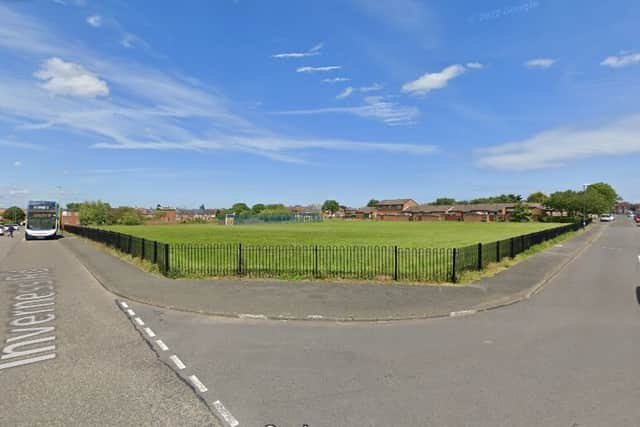
South Tyneside Council’s Planning Committee, at a meeting this week, voted to approve an application for land at Inverness Road in the borough’s Bede ward.
The parcel of land lies within the Perth Green area, adjacent to Perth Avenue and Iona Road, and contains a multi-use games area (MUGA).
In addition to this, council documents confirm the applicant intends to develop a dog walking area on the land to the south of the proposed MUGA.
A design and access statement submitted to council officials confirmed Karbon Homes would be the housing provider for the scheme upon completion.

The proposed housing mix includes 12 two-bedroom flats, 14 two-bedroom houses, 20 three-bedroom houses and four four-bedroom houses, with all properties being “affordable rented dwellings”.
Developers added that the proposals would provide much-needed affordable housing in the context of huge waiting lists in the region, and that the scheme’s benefits, including job creation and additional local expenditure, would “outweigh the minimal harm and loss of open space”.
During a council consultation exercise on the plans, the housing scheme attracted four public objections and one representation in support.
Objectors raised concerns about the “loss of green land” used by children and dogs, impacts on wildlife, increased traffic and “parking problems” and the plans making the Scotch Estate “feel more enclosed”.
At a meeting on Tuesday, August 27, at South Shields Town Hall, South Tyneside Council’s Planning Committee discussed the application.

The housing plan had been recommended for approval by council planning officers and was subject to a legal agreement securing financial contributions from developers to mitigate the impacts of the new homes.
This included a “contribution of £39,800 to allow South Tyneside Council to deliver overall biodiversity net-gain off-site within the South Tyneside area”, an “ecology coastal mitigation contribution of £20,150” and travel cards being offered to first occupiers to “encourage public transport usage”.
It was also noted that there would be “some loss of open space, part of which has historically been used as a playing pitch” but that the open space was “surplus to requirements” and allocated for housing in the council’s emerging local plan.
Council planners said that “taken together with re-provision of the MUGA on-site and the existence of other playing pitches in the immediate vicinity of the site, it is not considered that significant harm arises in this regard”.
Those behind the scheme previously said the new MUGA would “provide a high-quality modern facility for both existing and new residents to use, enhancing the overall provision within the Scotch Estate”.
However, it was revealed at this week’s council meeting that the replacement MUGA would not be built until the housing development was completed, which could take up to two years.
Concerns were raised about the loss of open space and the temporary removal of the MUGA, and associated impacts on local amenity and the potential for increased anti-social behaviour.
Although council planning officers stressed other sporting facilities and open space was available in the area, some councillors said these facilities were not as easily accessible as the existing MUGA.
Councillor Paul Dean said he supported the development but was “disappointed” that the replacement MUGA area was “not a priority and not being built first”.
Some councillors raised concerns about the new homes putting pressure on the area’s existing sewerage network, as well as questions about the affordability of Karbon Homes properties, compared to council properties.

Concerns were also raised about the development’s impact on bats and proposals to potentially place ‘bat boxes’ on nearby council properties as a mitigation measure.
It was noted that the scheme would be developed in conjunction with Natural England and that alternatives could be explored if bat boxes on council homes became an issue in future.
Councillor David Kennedy said he welcomed the building of “much-needed housing” but raised several issues.
This included potential anti-social behaviour issues with flats in the scheme, wider access issues, the impact of developing the “last piece of green space on the estate”, wildlife impacts and impacts on the local sewerage system.
Councillor Paul Brenen raised similar concerns about the loss of green space and sewerage, and questioned the need for the development and whether the houses were for South Tyneside residents or for those outside the borough.
Councillor Eileen Leask said there was a “desperate need” for houses to rent in South Tyneside and added the plan should be welcomed.
Councillor Joan Keegan added the proposed affordable houses were “essential” and would have a positive impact on children and families.
Councillor Shirley Ford added it was important, if approving the plans, to do everything possible to “protect as much open space and amenity and access for sport, as it is so important for health and wellbeing”.
Council planning officers noted that the development had sparked an objection from Sport England as the southern part of the site proposed for housing was historically a playing pitch.
However, it was noted that the council-owned site had not been used for formal sports for more than two decades and that the Sport England objection, in this case, would not trigger the planning application being referred to the government.
A motion to defer a decision on the Jarrow housing plan was initially put to the vote at the council meeting but failed to win support.
After being put to the vote again, the plans were approved by a majority of councillors present.
This included 11 councillors voting in favour and four councillors voting against.
Under planning conditions, the housing development must be brought forward within three years.
For more information on the housing plan or council decision, visit South Tyneside Council’s planning portal website and search reference: ST/0876/23/FUL.