
“Times are going to be tight for businesses” - North East leaders react to Autumn Budget
Business leaders in the North East have reacted to the budget, which was announced this week.
There has been "no shot in the arm" for businesses or the economy, according to the chief executive of NE1, who has reacted to the Chancellor Rachel Reeves' budget.
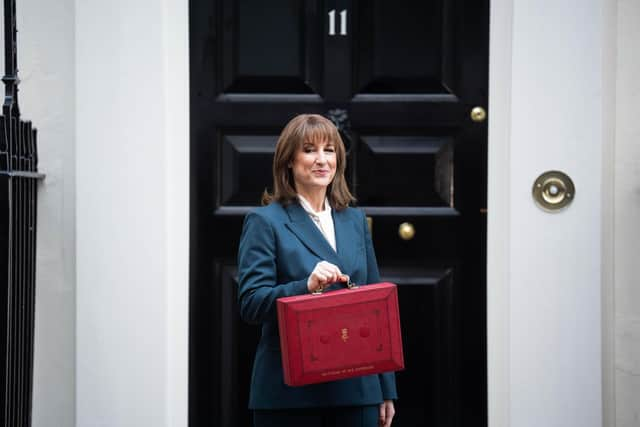

Reeves unveiled a series of tax rises in the Budget, details of which were inadvertently revealed early by the Office for Budget Responsibility (OBR) in what the Chancellor said was a "deeply disappointing and a serious error on their part".
Asking "everyone to make a contribution” through the tax hikes - which included a 'mansion' tax, threshold freezes and increased rates on property, savings and dividend income - Reeves pledged to invest in infrastructure referencing schemes across the country as she looks to spark growth in the economy.
Stephen Patterson of NE1 said: "There has been no shot in the arm for businesses or the economy with a budget that takes more from the wages of working people and adds to the financial pressures on businesses.
"With no tax cuts for working people, and a freeze on income tax thresholds for the next three years, there will be less disposable income and salary to spend. This doesn’t bode well for the towns and city centres still reeling from last year’s budget, and there was no respite in today’s announcement, with additional burdens placed on businesses with the increase in the minimum wage."
He continued: "This puts extra pressure on sectors like retail and hospitality, which are already struggling under significant pressure. In the UK, on average, one pub closes every day, and closer to home in Newcastle, 16 hospitality venues have closed since the last budget.
"With the last two budgets, the government has chosen to take over £70 billion out of the economy, meaning that times are going to be tight for businesses and finding the money for investment and growth is going to be difficult."
The chief executive of the Northern Powerhouse Partnership, Henri Murison, said that the Chancellor has made "welcome steps to fiscal devolution, such as the tourism levy", but added: "With council tax surcharge on mansions being retained by the Treasury the debate on access to Mayors and councils having access to wider range of tax instruments, such as national insurance, will only intensify.
"When our only dedicated local tax is topping up Whitehall funds, as local government is still underfunded across the most deprived parts of the country despite the fair funding review, it necessitates a complete reset in the way we fund local and regional government."
Jamie Cooke, co-Founder at iamproperty, agreed that the Mansion Tax will have an impact on "the very top end, with limited impact in the North East", but continued: "The reality is that today’s announcement leaves the majority of agents and home movers no better off.
"What’s far more damaging is the constant fluctuation this speculation has caused, pushing issues up and down the chain, creating hesitancy, and ultimately slowing the market when it can least afford it. We have said for a long time that the UK home buying process is fundamentally broken, and the absence of any meaningful attempt to tackle those systemic issues only makes the need for real reform more urgent."
Darren Mansfield, partner, commercial research at Knight Frank, noted how the statement "reaffirmed the government’s commitment to regional growth".
In terms of data centres, he said: "There was limited new policy detail for UK data centres in today’s Budget, but the continued commitment to innovation and national infrastructure will be welcomed across the sector.
In recent months, ministers have confirmed four AI Growth Zones in Oxfordshire, the North East, North Wales and, most recently, South Wales. The Budget also underlined the importance of long-term, reliable energy supply in supporting future growth. Alongside ongoing reforms to the grid-connections process, the Government announced further support for small modular nuclear reactors, signalling a broader focus on expanding low-carbon, firm power capacity that could help underpin energy-intensive digital infrastructure over time."
Anthony Andreasen, tax director at Gosforth-based RMT Accountants & Business Advisors, reacted to the reduction in the capital gains tax relief.
He explained: "The growth in the number of businesses becoming Employee Ownership Trusts has been a positive move in terms of succession planning and staff incentivisation, although the tightening of the rules since last year have created more complexities."
He said the reduction on such transactions will "make it less of an attractive option for business owners, many of whom will have spent decades investing in and building up their companies, and the hope will be that this change does not have a negative impact in terms of long-term business sustainability".
“The extension of National Insurance and income tax thresholds frozen for a further three years beyond 2028 will bring more people into higher tax bands over time, while the two per cent increase on tax rates on dividends, property and savings income will take a further chunk of individuals’ incomes out of their pockets.”
Rhiannon Bearne, deputy chief executive at the North East Chamber of Commerce, said the Chancellor "has attempted a delicate balancing" adding: "While many of our members will welcome the decision not to introduce further taxes on business, the capping of salary sacrifice on pensions will increase costs for some employers.
"There will also be understandable caution about the significant tax burden now placed on households and consumers. This shift risks weakening confidence, dampening demand and slowing growth in the months ahead."
Bearne agreed with the scrapping of the two-child benefit cap, and hailed the announcement of £16 million for a new STEM Centre in Darlington.
She continued: "We also welcome further commitments on planning and development, including funding for the Forth Banks development in Newcastle. The government’s recognition of capacity issues within the planning system, and the commitment of £48 million to address them, represents a significant win for the Chamber. We identified this issue in the Tees Valley Local Skills Improvement Plan in 2023, and today’s announcement shows that evidence-based, business-led insight can shape national policy.
"There is cause for guarded optimism, but what matters now is how today's measures play out in practice. The Chamber will continue to champion the interests of North East businesses as the implications become clear."